

I recall in 2002, making a prediction in an internal document, (relevant part replicated here) that the combination of home networks and broadband would alter forever, how we use internet. I have to admit I wasn't clear how, but as a user of both at the time, it was clear to me that the combination is unbeatoable for convenience, and the "always on" benefit transformed internet into a utility, more like running water or telephone. This benefit is in contrast to how most people accessed internet in 2002, which was, turning on the computer, and dial-up access.
Today, the computer is always on, and internet is always there. Its simpler to go to your browser to look up anything from a phone number to a restaurant, to a bank, than to use anything physical such as a phone book, or brochure.
This is the beginning of the true web lifestyle, and real interaction with the medium. Others call this Web 2.0.
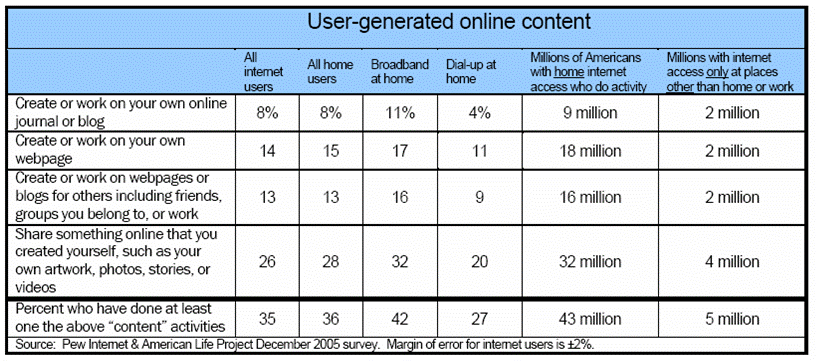
PEW have just released their latest broadband study, and the information on how we interact with the internet is the most fascinating part for me. This shows that the majority of users are interacting with the web, and are posting content on the web. That content can be blog posts, blog comments, web pages etc. Lots of room for opinion, and online everyone is an "expert".
This has far reaching implications for banks going forward. This new interaction explains my mini rant yesterday. MySpace is being replaced with youtube.com and other social networking activities. Its hard or impossible, and actually not necessary to try, to predict where all that is going. You can tell me that MySpace, and youtube.com are not relevant to banks. True, but they are relevant to how people interact with the web, and their expectations are being set in different ways. As they work through these and other sites, they will see and interact with others, with blogs, with opinions, and they will question traditional judgements. Some will accept those opinions, some will go to google.com/suggest, or Yahoo.com/answers and ask questions.
The nature of questions asked will be related to anything, for example, from best car, to best washing liquid to best bank in Rochester, New York.
We can be absolutely certain, that power is in the hands of the people, and brand loyalty loses its traditional relevance. Every brand is reduced to a web page. Banks have to establish other ways to become relevant to customers. This nature of this new world cannot be dealt with by a marketing campaign. I applaud HSBC and Wells for their efforts, which are small steps to try to learn the new medium, and understand how customers will interact.
I think more is needed though. For example I heard of a situation, where a customer of a bank commented in his blog about a privacy issue. Old world says ignore this, because we place ourselves at risk. In fact old world, we probably would not even know the comment was there. New world says, add comment to that persons blog post, identifiying as from that bank, thanking for the post, and explaining how it will be addressed. Others would see that post, and they will tell two friends etc. This is the at the core of the new world, and thats where Banks have to let go of old risk mindsets, and immerse themselves in the new world.
Anyway here are comments from PEW on user generated content (terrible name)
- Overall, 35% of internet users posted online content that fall into one of the categories listed below; that comes to 48 million American adults.
Technorati tags: online banking marketing pinkomarketing
 Bankwatch
One thought on “Bankers have to understand the new web lifestyle to survive”
Comments are closed.