

We are seeing references to global good shortages predominantly from the United Nations. It is an unfortunate fact we are used to hiring of such concerns in 3rd world areas, but a global food shortage suggests something new. I looked into it and uncovered some new issues.
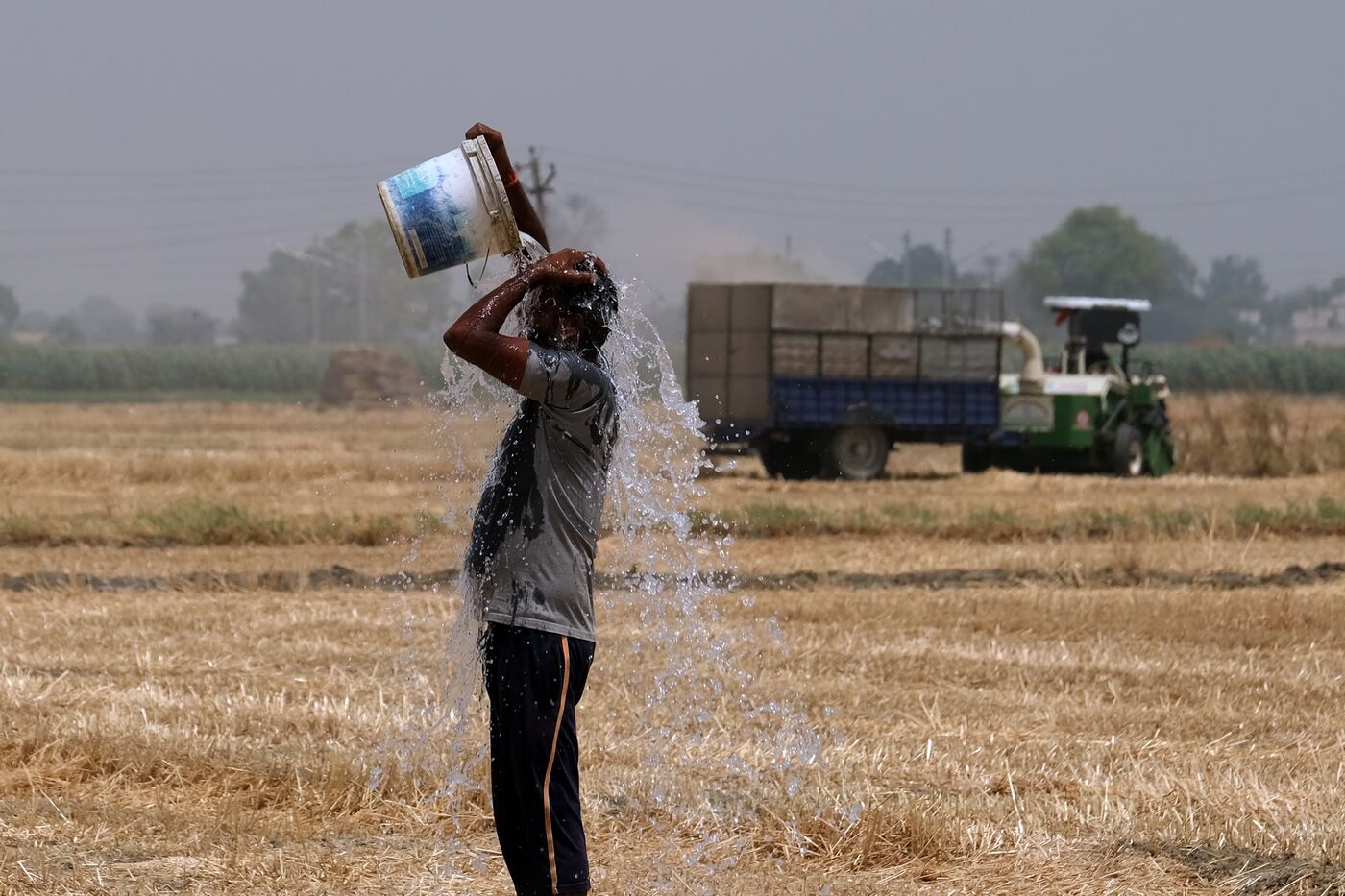
This in the context of other big concerns for Global warming and shift to alternative power solutions, COVID and the Russian attack on Ukraine.
Is there really another concern? This is the question I decided to ask and here follows some research I uncovered. I read it that there is risk but that it will be most felt in 3rd world locations, however all countries will be impacted here to some extent due to the much discussed supply chain disruptions that flow from COVID, war and shifts in weather patterns.
What is the scale and breadth the food shortage?
Bloomberg have a well researched article here. https://www.bloomberg.com/opinion/articles/2022-05-17/the-world-s-food-baskets-need-a-better-safety-net-as-india-curbs-wheat-exports
Key food groups are provided by a relatively small group of countries.
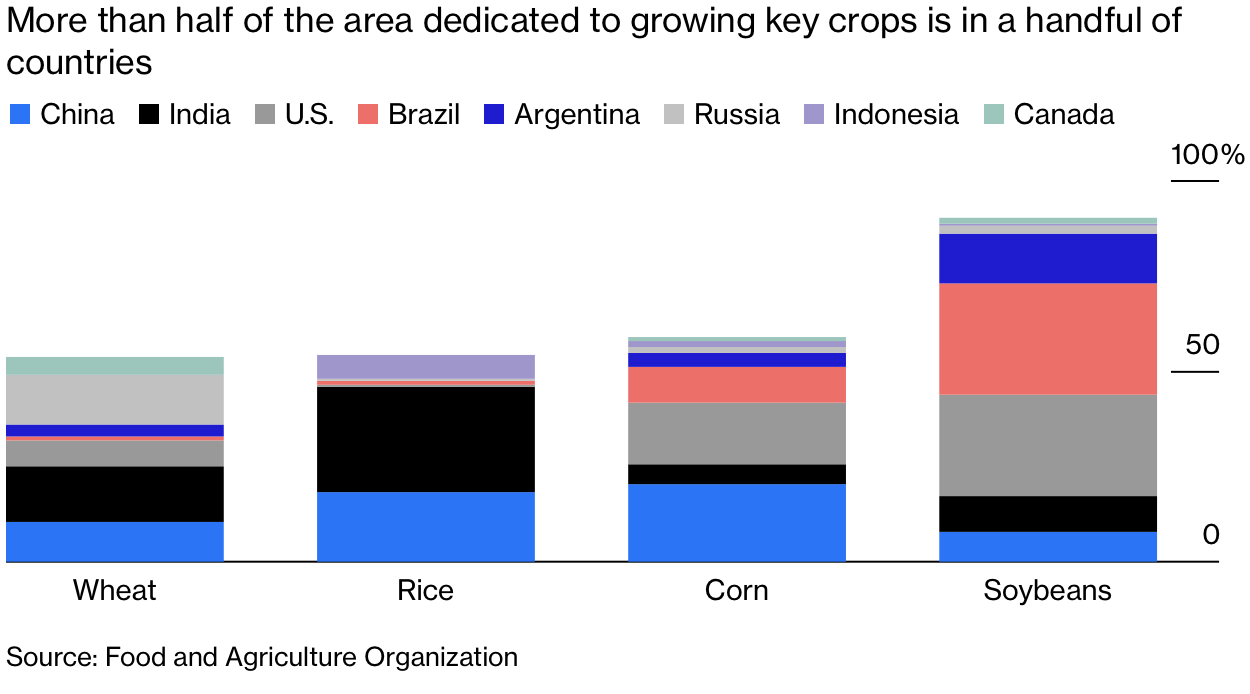
The biggest worry from a food risk perspective would be a perfect storm of food impacts on those suppliers which knocks out more than one and degrades the initial feeling of relief based on positive geographic spread.
In fact those perfect storms are occurring in climate impacts with concurrent monsoon and extreme heat bringing floods, fires, poor crop production and these impacts are further exacerbated by war in Ukraine. The steppes of Ukraine, produced over 1/3 of world grain. The impacts of tanks and people displacement on agricultural production is clear from watching CNN war coverage.
Thing may get even worse. The expectation that a dearth in one food basket would always be counterbalanced with surfeits in other ones had seemed trustworthy — after all, crop failures are normally a result of drought, and all that lost rainfall typically ends up somewhere else in the world. Unfortunately, a changing climate shifts those expectations. If rain gets too excessive, it can cause problems of its own, drowning crops and washing away seedlings — precisely the situation now being seen in Australia, one of the world’s major wheat exporters. A warmer atmosphere can hold more moisture, making such crop-destroying flood events even more likely – Bloomberg
Andrew Bailey – Bank of England
“Ukraine does have food in store but it can’t get it out at the moment. While the finance minister was optimistic about crop planting – as you know Ukraine is a major supplier of wheat, a major supplier of oil – he said he was optimistic about planting, but he said at the moment we have no way of shipping it out as things stand, and it is getting worse,” Bailey said.
World Economic Forum has been researching and sponsorship of future solutions.
Ortega dives deeper into the causes, and the potential end, of increased prices:
Q: What has led to the rise in food costs?
A: We as consumers have experienced the most significant shock in global food prices in more than a generation.
The COVID-19 pandemic, changes in consumer behavior, and supply chain disruptions have led to an increase in food prices. More recently, the war in Ukraine has affected global grain markets and edible oil markets—such as sunflower oil, palm oil, and other vegetable oils—which have contributed to inflationary pressures on food prices.
Q: How has the war in Ukraine affected wheat planting and distribution?
A: Russia and Ukraine supply a significant amount of the cereals in the world market, and we are in the middle of planting season in Ukraine. Our report suggests that we’re looking at a forecast of roughly only 60% to 70% of the planting area going into the ground this spring. So, when we’re looking at the global markets for a lot of these commodities, we’re seeing a lot of countries starting to stockpile.
The main effects from the war is going to be in countries in the Middle East and Northern Africa that are highly dependent on this region for a lot of their imports. For example, places like Egypt, Lebanon, and Turkey. Lebanon, a country of about 7 million people, depends on Ukraine for over 80% of its wheat. This is a country that’s experiencing skyrocketing inflation now. Combined with a lot of the vulnerable populations in these regions, they’re going to be some of the hardest hit nations.
Lastly for this piece, despite the spread of food production across the countries indicated, the largest producers are as noted here in Investopedia; there is low agreement and terms of global trade strategy amongst these four.
KEY TAKEAWAYS
Four of the world’s dominant food-producing countries—China, India, the U.S., and Brazil—also rank in the top ten countries in the world for total geographic land area.25
China is the world’s largest grain producer, and its agricultural processes are highly efficient that use minimal arable lands.
India is among the world’s largest producers of milk, while it boasts the most global exports of refined sugar and milled rice.
The U.S. has long been a superpower in food markets, and it is still one of the world’s largest food exporters.
Brazil is the world’s main producer of soybean, and it relies heavily on China as its export partner.
 Bankwatch