

Summary for Policymakers.
INTERLAKEN, Switzerland, March 20, 2023 — There are multiple, feasible and effective options to reduce greenhouse gas emissions and adapt to human-caused climate change, and they are available now, said scientists in the latest Intergovernmental Panel on Climate Change (IPCC) report released today.
Aditi Mukherji, one of the 93 authors of this Synthesis Report
“Almost half of the world’s population lives in regions that are highly vulnerable to climate change. In the last decade, deaths from floods, droughts and storms were 15 times higher in highly vulnerable regions,“ she added
The Summary Report
UN released the Annual IPCC today. It is being released in stages here and so far only the summary.
Here are some top level comments.
A.1
Human activities, principally through emissions of greenhouse gases, have unequivocally caused global warming, with global surface temperature reaching 1.1°C above 1850–1900 in 2011–2020. Global greenhouse gas emissions have continued to increase, with unequal historical and ongoing contributions arising from unsustainable energy use, land use and land-use change, lifestyles and patterns of consumption and production across regions, between and within countries, and among individuals (high confidence). {2.1, Figure 2.1, Figure 2.2}
A.2
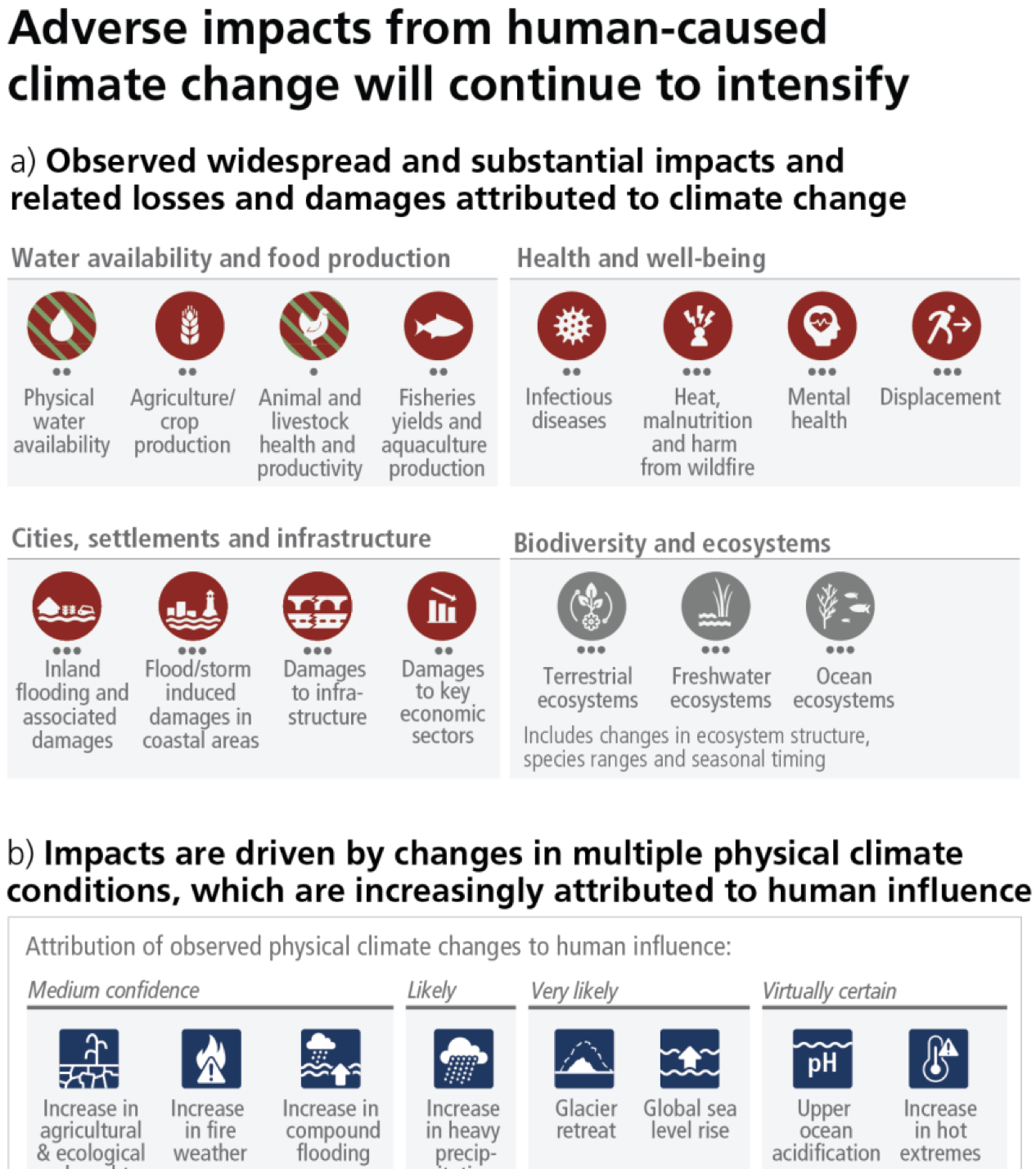
Widespread and rapid changes in the atmosphere, ocean, cryosphere and biosphere have occurred. Human-caused climate change is already affecting many weather and climate extremes in every region across the globe. This has led to widespread adverse impacts and related losses and damages to nature and people (high confidence). Vulnerable communities who have historically contributed the least to current climate change are disproportionately affected (high confidence). {2.1, Table 2.1, Figure 2.2 and 2.3} (Figure SPM.1)
 Bankwatch