

Heading edited to reflect first in a loose series entitled “AI- how should we think about it Episode 1 (AI-E1)”
My belief is that we are worrying about the wrong things with AI. Here are some views that encapsulate the general worry. And the worry is more than coffee shop chatter. Some very smart people are worried.
When I say worrying about the wrong thing, I see ChatGPT as an extended dataset with some logic on top. We are used to smaller data sets and a search tool such as google, Bing or duck duck go. They contain additional logic mainly related to privacy, advertising, personalisation and association with other applications such as email or calendar.
ChatGPT has two major differences
- extended data set including some dark web-ish data (refer Washington Post list of secret data sources within ChatGPT)
- logic based on patterns beyond a simple search but that looks at the entire data set within those patterns and develops answers framed according to the logic. It could be a term paper, a conversation, an association of facts.
Let’s look at some recent media from Economist and a highly intelligent view from Niall Ferguson published in Bloomberg. Lastly let’s leap far ahead to the mind of Ian Banks and the Sublime; an AI living in a muliverse dimension and involved in a war that has spread to humankind (The Real) in this dimension.
ByNiall Ferguson – 9 April 2023 at 00:00 GMT-4 courtesy of Bloomberg
It is not every day that I read a prediction of doom as arresting as Eliezer Yudkowsky’s in Time magazine last week. “The most likely result of building a superhumanly smart AI, under anything remotely like the current circumstances,” he wrote, “is that literally everyone on Earth will die.
…
Yudkowsky is not some random Cassandra. He leads the Machine Intelligence Research Institute, a nonprofit in Berkeley, California, and has already written extensively on the question of artificial intelligence.
…
“for example,” I suggested, “because we tell it to halt climate change and it concludes that annihilating Homo sapiens is the optimal solution.”
How AI could change computing, culture and the course of history – discussion in the Economist.
As the special Science section in this issue makes clear, the field’s progress is precipitate and its promise immense. That brings clear and present dangers which need addressing. But in the specific context of gpt-4, the llm du jour, and its generative ilk, talk of existential risks seems rather absurd. They produce prose, poetry and code; they generate images, sound and video; they make predictions based on patterns. It is easy to see that those capabilities bring with them a huge capacity for mischief. It is hard to imagine them underpinning “the power to control civilisation”, or to “replace us”, as hyperbolic critics warn.
As Niall points out:
The debate we are having today is about a particular branch of AI: the large language models (LLMs) produced by organizations such as OpenAI, notably ChatGPT and its more powerful successor GPT-4.
This is important and brings us forward to my current thinking. The thing we are worried about is not AI as understood in the best science fiction. Take this from Ian Banks in The Hydrogen Sonata a series of books I highly recommend.
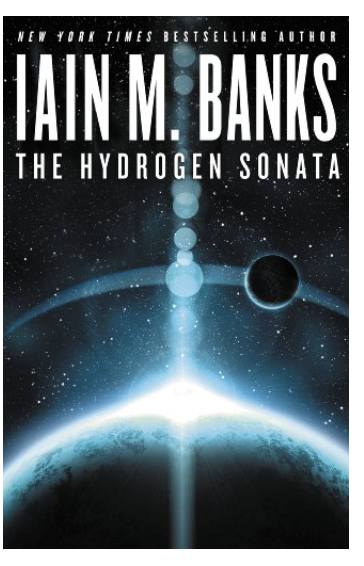
The absolutely most splendid wonders, experiences and achievements of the Real and all those within it were as nothing to the meanest off-hand meanderings of the Sublime. The most soaring, magnificent, ethereal cathedrals to reason, faith or anything else were as mere unkempt and dilapidated hovels compared to the constructions – if they could even be described as such – within the Sublime.
…
The Gzilt were a sort of cousin species/civilisation to the Culture. Nearly founders, though not quite, they had been influential in the setting up and design of the Culture almost ten thousand years earlier, when a disparate group of humanoid species at roughly the same stage of technological and societal development had been thinking about banding together. Amiable enough, if somewhat martially uptight due to an unusual social set-up that basically meant everybody was presumed to be in a single society-wide militia – hence everybody had a military rank, from birth – they had made significant contributions to the establishment and ethos of the Culture while it was all still at the being-talked-about phase but then, almost at the last moment, and to pretty much everyone’s surprise, in a way including their own, they had decided not to join the new confederation.
…
So how should we think about AI?
My point with this piece is to open our minds to the real AI we should consider if we want to worry about, and it does not yet exist. It is far more than some servers, new fast chips and smart programming.
Meantime ChatGPT is a smart evolution of old style search based on a combination of extenuated data, smart logic and perhaps potential for misuse , accidental or deliberate. It is unclear if machine learning is included but even then that would be based on rules known to humans.
I am not trying to minimise ChatGPT but rather understand its place in the evolution and I propose that step change has not happened.
ChatGPT is not Artificial Intelligence.
Tags #AI #ChatGPT #AI-evolution #AI-series #AI-E1
 Bankwatch