Can a Bank change! Wells Fargo have a blog


In a brilliant move Wells have introduced a blog. They have bypassed the issues about why a blog is necessary, and how it works for a bank, with all the associate internal politics, by focussing on Wells Fargo and San Francisco history. Blog address Guided by History Interactive Tour. In creating this blog, we had so many photographs from our archives to choose from it was difficult to select only one or two pictures per post. There are also events that just make more sense when seen in animation, like the progress of the fire within the city. The tour … Continue reading Can a Bank change! Wells Fargo have a blog

Consumers becoming less uncomfortable With Online Banking


Significant drop of 10% in consumers “extremely concerned” with security of online banking. There is evidence that online tenure mitigates security concerns. The concern will never disappear any more than worry about air crashes, but familiarity will ensure customer participation. Consumer Internet Barometer – Economics – The Conference Board Nearly 52 percent of online consumers are extremely concerned about security when banking online, but the level has fallen from 62 percent in 2004.At the other end of the anxiety barometer is the filing of federal taxes online. Only 43 percent of web surfers feel the same degree of apprehension about … Continue reading Consumers becoming less uncomfortable With Online Banking

Nacha to pilot online authentication concept


Following on this proof of concept announced last year, NACHA is to move to pilot. The concept levers Banks' investment in mandated (US) two factor authentication, and requires ecommerce transactors to log into their online banking to validate payments. This makes sense and is not dissimilar to the Canadian Interac Debit which is slowly moving out there. It remains to be seen though, whether it can be implemented in a way that's not inconvenient to the user, particularly compared to credit card purchases. News (April 13, 2005) An operational test of a system by which consumers could instruct their banks … Continue reading Nacha to pilot online authentication concept

Lessons to Learn From Citi Data Breach


The blame is being placed firmly on the merchant here, (originally indicated to be OfficeMax, but now unspecified?). This explanation seems all too simple, but perhaps it is that simple.

Lessons to Learn From Citi Data Breach

Yet experts say two important points to keep in mind when examining this situation are
1) the breach occurred at a third party, not the bank, and
2) this incident is not about PIN technology itself, but the way the data was stored.

In order for this to be the case, the merchant would have to be storing:
a) PIN
b) complete replica of the mag strip data

I still suspect there is more to it, in what is clearly an inside job.

However, if that is all there is to it, then ….

Relevance to Bankwatch:

  • Banks have to be accountable for the data that is shared with
    private networks, and merchants; its unacceptable to blame all the links in the chain, because there are so many.
  • Customers will (rightly) look to the issuing bank to protect their information
  • Technology allows for sufficient data sharing to complete a transaction, without sharing all the customers authentication
    credentials (e.g. public key encryption). Anything short of that is technological laziness

Continue reading “Lessons to Learn From Citi Data Breach”

Banks that get “it” – comparison


Lets have fun – compare 5 banks:

Wells Fargo (US)
Bank of America (US)
Barclays (UK)
Bank of Montreal (Canada)
Bankinter (Spain)
Santander (Chile)

I picked Spain because they are renowned for their internet banking. South America is similar but for different reasons. The hyperinflation has driven consumers to expect instant access to better manage their affairs. So here is our line-up – lets take a consumer look, and pardon my ignorance of Spanish and Portugese, although my American isn't that great either.

Read below the fold for home page assessment, and how I got to the following Bankwatch relevance.

Relevance to Bankwatch:

  1. OLB log in has to be on the home page.
  2. grab the users attention intelligently – refer Santander (but lose the TV crook)
  3. Talk to your primary audience, make the rest secondary – prioritise
  4. The home page isn't a site map – its a road map
  5. A sophisticated suite of functions is critical

Continue reading “Banks that get “it” – comparison”

Ranking of Spanish banks


This from Euroresidentes.com If you spend long or frequent periods away from your property in Spain, you should make sure that the bank you choose has a good online banking service. Bankinter is Spain's most successful online bank.Some Spanish banks have special offices in tourist areas (especially the Costa del Sol, Costa Cálida and Costa Blanca). They are called Oficinas Internacionales and have staff who can speak several European languages. Example of theses are Caja Murcia and the CAM (Caja de Ahorro del Mediterráneo). Below you can find a description of the services offered by Spain's biggest savings banks. Click … Continue reading Ranking of Spanish banks

MySpace and why Bankers should study it carefully


This may look off topic to traditional bankers, but bear with me here. I cross post this from my Web Lifestyle blog, because this is a living demographic shift that we had better understand.

I work in the middle of online banking, and yet this post from Alexa (pasted below) is worth studying, and filing for reference next time you are in a planning session.

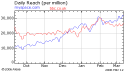
Alexa studies web trends. They deal in facts. Fact: MySpace is in the top 10 of all web sites in the world. The user base are all teenagers.

graph.png

Now look at MySpace compared to CNN. MySpace have overtaken CNN just last month.
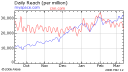
cnn graph.pngbbc graph.png

The issue isn’t that MySpace is bigger than CNN. The issue is that they are so diametrically different. You watch CNN (or BBC) and they watch MySpace. It doesn’t matter because MySpace overtook both last month. (Note MySpace is blue in both cases).

Just as us boomers see things different than our parents you can bet the MySpace generation will act similarly relative to us. The next generation expect a degree of informatlity, of randomness, and simplicity – just make it so!
We had better not be building the same boring bank web sites that we do today, and here are some examples.

Relevance to Bankwatch:

Today

  • static pages
  • bank defined
  • Lowest browser level
  • Assume dial up
  • Replicate branch info

Future

  • evolving screen (read Ajax and beyond)
  • customer defined
  • maximum browser level
  • Assume maximum bandwidth
  • Value add – eg free spending assessment *

* Wells Fargo already have this, today, 2006, with a view to GenYers needs. Don’t make me think about it- just give it to me!
____________________________________________

From my other blog www.2036ad.com

MySpace – the James Dean/ Mick Jagger of 2006

MySpace is fascinating, and this is one of the most prescient posts I have seen for a while. This from Alexa sums it up so beautifully:

If you go to MySpace, you will probably walk away with the impression that it is a joke… some kind of junkyard of personal pictures, blogs and random stuff clumsily plopped onto the Web. And, unless you are a studious observer of the Alexa Traffic Rankings, you would almost certainly walk away with the impression that it is no big shakes. But you would be dead-wrong.

If you are under 18, move on, because you already get it. Older than that, read on. Read that intro carefully, and consider how my parents felt about Mick Jagger, Eric Burdon, Dylan, and Elvis – well don’t even go there!

But consider today … who are we listening to on today’s TV ads. Cadillac/ Led Zeppelin being the archetypical example. Good grief there is no more irresponsible reprobate than Robert Plant, and the whole group had no respect for anyone around them, either in the music business, or their listeners .. but the music … hmmmm

Alexa Web Search

I think the lesson here is not to discount the kids. They will become the prime Internet demographic in the years to come and they will determine what’s hot and what’s not. Just like with soda, music and movies, the marketing dollars are more interested in my kids than me… and judging from MySpace, the marketers may be right. The kids are a major force on the Web.

So where am I going with all this. MySpace is not understood by those of you who are still reading. Those who get it have gone. So we had better understand what’s happening there, and consider that generation because believe it or not, they will be earning $100K per annum, buying homes, having families, and investing for retirement within 10 – 20 years.

Not a long time in the future in strategic terms, and the brands, sites that attract them soonest will win them. They are loyal, and have pack mentality. Consider the market share of Microsoft, Google, MySpace in their world.

Continue reading “MySpace and why Bankers should study it carefully”

Online Credit Card security and the PSP sector


Good summary of some of the changes developing in the credit card industry.

Relevance to Bankwatch:
The message here is that there is no magic bullet, and despite the several initiative listed here, liability fraud is not eliminated, and liability remains with the card issuer in many situations.

SECPay – Online Credit Card Security and the PSP Sector

Note: About SECPay

SECPay is the UK’s largest independently owned processor of secure, real-time, online credit and debit card transactions. Specialising in the provision of payment services for merchants on the Internet, through Call Centres and for Mail Order Fulfilment Houses. SECPay handles the capture, authorisation and settlement of credit and debit card payments and all the associated electronic and physical security required.

Despite the early fears surrounding e-commerce transactions, using credit cards online has become safer due to the steps taken by key industry members. Chris Dipple, Technical Director at leading real-time payment service provider, SECPay, explores how online credit card security has improved and what still needs to be done to ensure all online credit card transactions are as secure as possible.According to the IMRG, Internet Shopping is expected to be worth around £17 billion in the UK this year, representing around 7% of all retail sales. The IMRG predicts that 400 million orders will be made by the UK’s 16 million internet shoppers. With this phenomenal level of financial transactions, online payment methods have evolved significantly over the last decade.

Continue reading “Online Credit Card security and the PSP sector”

Consumer reaction to PIN based fraud will be mixed


Avivah Litan, an analyst at Gartner is beig very pro-active in breaking the news and risks emanating from the recent Citi, Wells, BofA debit card fraud situation. While information remains sketchy, it seems clear the bad guys were able to re-create a series of debti cards and their PIN’s and spend the money in the associated accounts.

USATODAY.com – Security breaks could curtail debit card use

PIN-based debit card transactions have been seen as more secure than signature-based debit card purchases

The assumption has been that PIN will eliminate ‘card present’ fraud.  The combination of a chip card that can’t be replicated and a PIN is the panacea.  However the Citi ATM situation just validates what your internal security guys will always tell you.  The best you can do is manage fraud;  you cannot eliminate it because the bad guys are always one step ahead of you, and have already factored your new security into their plans.
Some things are clear, and this varies a little between Europe and North America, but not much:

Relevance to Bankwatch:

  1. Simple introduction of PIN and shift of liability to the consumer could be an unmitigated disaster, without consumer support from the banks – consumers look to banks to provide security, not excuses
  2. The management of concurrent mag stripe/ chip, and signature/ PIN could result in the worst of both worlds.  Increased operating costs, and increased fraud.

Continue reading “Consumer reaction to PIN based fraud will be mixed”

Retail Banks Globally Very Optimistic About Growth Prospects, Accenture Study Finds; Banks’ Focus Shifting from Cost Reduction to Growth


Postive report from Accenture.

The survey also highlighted a significant transformation in retail bankers’ strategic focus, with a majority (56 percent) of the respondents saying that their focus is shifting from cost reduction to growth. When asked to identify their top priorities, the greatest number of respondents — 87 percent — selected “increasing revenues,” followed by 69 percent who selected “reducing costs.”

When asked to identify the strongest motives behind the drive for revenues, the two cited most often were investor expectations of profitable growth and the need to achieve cost-efficient scale, selected by 89 percent and 73 percent of respondents, respectively.

Relevance to Bankwatch:

The shift from cost reduction to revenue growth. Its generally accepted that costs have been squeezed as much as they can be for now. The shift to online banking and self service is stabilising now, and the displacement of tellers has occurred. The next wins are process improvements, and revenue growth.

The survey also highlighted a significant transformation in retail bankers’ strategic focus, with a majority (56 percent) of the respondents saying that their focus is shifting from cost reduction to growth.

Retail Banks Globally Very Optimistic About Growth Prospects, Accenture Study Finds; Banks’ Focus Shifting from Cost Reduction to Growth

NEW YORK–(BUSINESS WIRE)–March 13, 2006– Many Say They Expect To Grow Faster Than the Overall Retail Banking Sector in Their Home Markets.Four out of five retail banks project annual growth of more than 5 percent over the next few years, in many cases outpacing projected growth for the retail banking segment in their home markets, according to results of an Accenture (NYSE:ACN) study released today. The study is based on a survey of more than 100 retail-bank executives in the United States, Europe and Asia/Pacific designed to shed light on their strategies for achieving growth in the coming years and to analyze how they will differentiate themselves in an ever-more-competitive retail banking market.

Continue reading “Retail Banks Globally Very Optimistic About Growth Prospects, Accenture Study Finds; Banks’ Focus Shifting from Cost Reduction to Growth”