

Summarize
The strategy marks a break from Beijing’s reliance on subsidies and state funding.
August 9, 2026 at 5:00 PM EDT
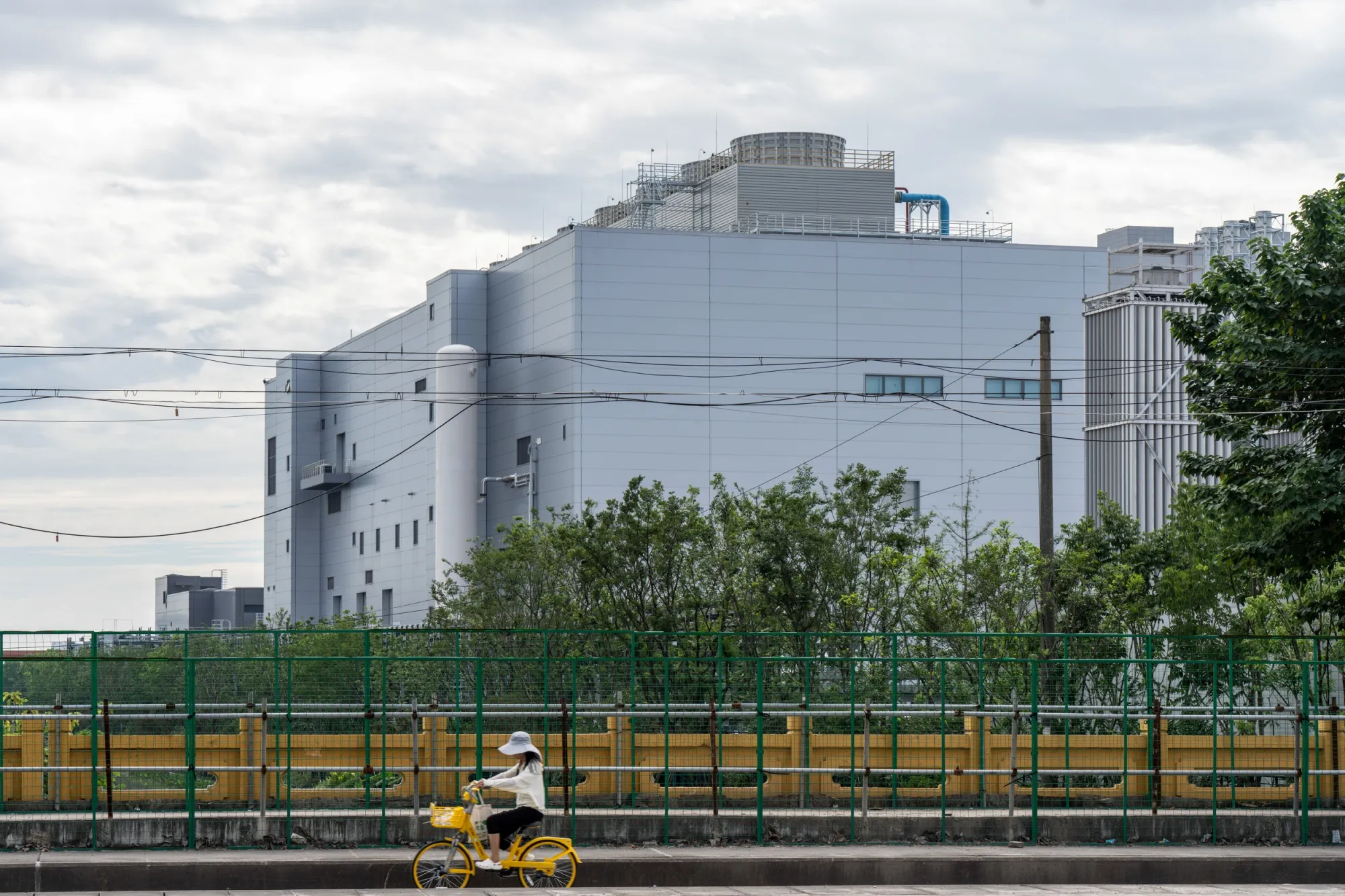
Even by the frothy standards of the AI era, CXMT Corp.’s trading debut in Shanghai last month was extraordinary.
Within a few hours, the memory chip maker — seen as Beijing’s best hope of reducing reliance on foreign suppliers and challenging the US in AI — surged more than 500% to become the most valuable stock in mainland China, eclipsing Industrial and Commercial Bank of China Ltd., which held the top spot for years.
The frenzy was the culmination of one of the country’s most aggressive efforts yet to marshal the power of its $28 trillion stock and bond markets.
Regulators have fast-tracked IPOs for strategic companies and opened more avenues for them to raise money through bond sales. When tech stocks tumbled in July, authorities intervened with unusual speed to restore confidence. While the move was not aimed specifically at supporting CXMT, the stock launch was a factor in the decision, according to a person with knowledge of the matter, who asked not to be identified discussing private deliberations.
Access to capital has long been one of America’s biggest advantages in technology. Now Beijing is trying to close that gap, as artificial intelligence — perhaps the most capital-intensive industrial undertaking in modern history — emerges as the next engine of economic growth and military advantage.
Chinese tech firms raised about $217 billion through initial public offerings and bond sales over the past two years, according to data compiled by Bloomberg. For every $1 they secured, US peers raised more than $6, led by companies including Amazon.com Inc. and Alphabet Inc.
It represents a change in how Beijing finances its strategic industries. China has rarely used capital markets as a major industrial policy tool, relying instead on subsidies, tax incentives and state investment. The shift opens access to the $26 trillion held by citizens — the world’s largest pool of household savings — while Chinese companies also enjoy some of the cheapest funding globally.
China has already shown how a mix of state support and manufacturing prowess can build world-beating industries, as it did with electric vehicles led by BYD Co. But AI is a more difficult race, with Washington seeking to restrict Beijing’s access to the world’s most advanced chips.
“Over the past few years, US firms have had greater access to capital, but financing costs are rising,” said Chris Miller, a professor at Tufts University and author of Chip War: The Fight for the World’s Most Critical Technology. “If Chinese firms secure a durable advantage in capital access, this would provide an advantage, though Chinese domestic compute is still substantially more expensive because of the lower quality of Chinese AI chips.”
Fast-Tracked IPO
Beijing cleared the runway for CXMT months before its debut. The company was the first to go through a “preliminary review” pilot reserved for strategically important firms, allowing regulators to resolve key issues before a formal IPO application.
It went from filing to trading in less than eight months — unusually swift for a process that could take years — and raised about $9.8 billion in one of the country’s biggest IPOs in years.
However, the offering also exposed a paradox. CXMT’s shares closed 466% higher on their first day, suggesting the share sale was priced well below what buyers were willing to pay. China’s practice of conservatively pricing IPOs shields investors from losses but leaves the chipmaker with a smaller war chest than rivals such as South Korea’s SK Hynix Inc., which recently raised $26.5 billion in the US.Minimax CEO Yan Junjie, right, and COO Yun Yeyi during the company’s listing ceremony at the Hong Kong Stock Exchange in January.Photographer: Lam Yik/Bloomberg
Days before the debut, a selloff in tech shares threatened to derail momentum. Beijing responded with one of its broadest rescue effortsin years, with regulators, state funds and major investors moving quickly to stabilize sentiment.
The intervention underscored a broader strategy. Since 2025, regulators have built a coordinated policy framework to support tech companies throughout their development, combining bank lending, bond issuance, capital markets and long-term investment. The People’s Bank of China, China Securities Regulatory Commission and Ministry of Finance are among the agencies behind the effort.
If China’s economic growth falters in the second half, policymakers are more likely to favor targeted monetary tools to increase support for some key areas including tech innovation, rather than roll out broad-based stimulus, according to a person familiar with the matter.
The CSRC and PBOC didn’t immediately respond to requests for comment on China’s shift toward capital market financing and on second-half policy measures.
Beijing sees strong markets as essential to its tech ambitions. Household savings will only flow into strategic industries if investors believe the bets will pay off. So far, it appears they do: the chip-heavy STAR 50 Index hit a record high in June and is up 30% this year, compared with 1.4% for the CSI 300.
More tech listings are on the way. Z.AI Co. and MiniMax Group Inc. are pursuing A-share listings after their Hong Kong debuts. Moonshot AI — whose Kimi K3 model sent ripples through Silicon Valley — told investors it is preparing to go public in as early as six months, while DeepSeek has begun laying the groundwork for its own IPO.
“In the US, hyperscalers are effectively underwriting much of the AI buildout,” said Hong Hao, chief investment officer at Lotus Asset Management Ltd. “In China, if that doesn’t come from the state, the capital ultimately has to come from the market.”
Bond Market
The bond market tells a similar story. Authorities have promoted green and tech-focused bonds, urged banks and investors to back sci-tech issuers, and opened the market to more first-time borrowers.
Chinese tech companies have sold at least $38 billion of onshore and offshore bonds this year, the most for the same period since 2016. But that’s only about 7% of the $578 billion raised by their US counterparts, a third of it by Amazon, Alphabet and SpaceX.
The push comes as Beijing tries to rein in leverage after years of debt-fueled growth. With the economy slowing and local governments saddled with debt, policymakers are looking for new ways to fund critical industries without depending solely on the state’s balance sheet.
“The state simply no longer has the same capacity as it once did to stimulate the economy or even fund all the sectors it wants,” said Fraser Howie, an independent analyst and co-author of Red Capitalism: The Fragile Financial Foundation of China’s Extraordinary Rise. “Remember as well that funding in China when coming from the state, local or central, means that is money not going to schools, hospitals etc. At least in the US, that is not the tradeoff.”
Regulators have told financial institutions to provide stable financing to tech companies but stopped short of setting hard lending targets — even as they track loan growth and can call in laggards to explain themselves, according to people with knowledge of the matter, who asked not to be identified discussing private matters.
But banks still prefer stable cash flows and profitability to the R&D-heavy, loss-making early stages of tech startups, the people said. While tech loans made up 22% of new corporate lending in the second quarter, according to PBOC data, bankers said most went to mature companies rather than high-growth firms. That may explain why regulators are turning to capital markets.
The National Financial Regulatory Administration didn’t immediately respond to a request for comment.
Cheaper Funding
One edge China holds over the US is access to some of the world’s cheapest funding.
Major Chinese tech companies are borrowing at an average bond coupon of 1.9% this year, more than 300 basis points below their US peers, according to data compiled by Bloomberg — the widest gap since at least 2015. The spread also reflects China’s much lower interest rates and inflation.
Contemporary Amperex Technology Co., the world’s largest battery maker, issued five-year yuan notes with a 1.58% coupon, compared with the 5.25% paid by South Korea’s LG Energy Solution Ltd. on a dollar bond of similar tenor. Attendees at the CATL Tech Day in Beijing in April 21. China’s technology and battery stocks have been on a blistering rally.Photographer: Qilai Shen/Bloomberg
“This creates a meaningful competitive advantage,” said Zhu Lei, head of Asian fixed income at Fidelity International. Chinese tech firms can borrow far more cheaply than many Western peers, she said, while the availability of so-called patient capital — long-term money not chasing quick returns — allows them to invest more aggressively in AI, capacity and research.
Smaller companies are also benefiting. Jiangsu Lettall Electronic Co., a little-known electrical components maker in eastern China, sold its first public bonds in March, raising 200 million yuan to buy computing equipment for its AI business. The three-year notes carried a 2.5% coupon.
“It was quite difficult for non-state owned enterprises or those in emerging sectors to raise funds from China’s domestic bond market,” Ajing Ding, Lettall’s board secretary, said in an interview. “There’s a clear shift from the top down.”
Investor Flows
Equity investors are following Beijing’s lead. Money has flowed out of property, consumer and other traditional growth sectors into chipmakers and advanced manufacturers. Today, tech’s weighting in the CSI 300 has grown to rival — and at times surpass — that of financials.
There are risks to the enthusiasm, warned Gary Tan, a portfolio manager at Allspring Global Investments. CXMT, he said, is trading at a significant premium to global memory peers, suggesting policy-driven sentiment and scarcity value are playing a larger role than fundamentals in the near term.A facility on the outskirts of Shanghai operated by CXMT, China’s top producer of memory chips.Photographer: Qilai Shen/Bloomberg
Flooding policy-backed sectors with capital can also result in excess capacity, margin compression and overcrowded positioning, according to Fidelity’s Zhu, who flagged solar panels and electric vehicles, where years of strong policy support ultimately fueled intense competition and weaker profitability.
The deeper question hanging over China’s capital markets push is whether money alone can close the tech gap.
“Capital is a necessary condition, but it is not a sufficient one,” said Hongxu Wei, a senior economist at Anbound, an independent think tank. Land, technology and talent are also forms of capital, and the real challenge is in turning breakthroughs into commercial applications, he said.
China may ultimately require less money than the US to achieve similar outcomes. Companies such as DeepSeek and Moonshot said they can build competitive models at a fraction of the cost claimed by many Western rivals. The Kimi K3 mobile app on a smartphone. In July Moonshot released the more advanced open-weight model.Photographer: Lam Yik/Bloomberg
UBS Group AG estimates the training costs for China’s models are less than 10% of those of global leaders such as OpenAI and Anthropic PBC, while the average API price for major China models is below 20% of comparable global peers.
Those efficiencies could prove to be one of China’s biggest advantages. Instead of trying to out-innovate the US, Beijing may be able to narrow the gap by industrializing and commercializing AI at scale, drawing on its manufacturing base, deep supply chains and engineering talent.
“What will ultimately shape US-China tech competition is large-scale, sustained investment in both innovation and industrial capacity,” said Kyle Chan, a fellow at the Brookings Institution who researches China’s technology and industrial policy. “The country with all of these ingredients will have an enduring advantage.”
 Bankwatch