

Summarize
Written by: SoftMaker
The Friday Chat

The stack of paper on your desk keeps growing, the file folder is bursting at the seams, and at some point you make the decision: from now on, everything goes digital. A few weeks later, the stack is growing again – and your guilty conscience right along with it.
The problem is almost never the technology. It’s the sorting.
Why the paperless home so often fails
Most guides to the paperless home read like an instruction manual for a second full-time job. Every document is supposed to be scanned, sensibly named and filed into a carefully thought-out folder structure. “Insurance / Renter’s / 2026,” “Taxes / Receipts / Q3,” “Car / Repairs / Invoices” – a sprawling tree that looks wonderful on paper (the irony…).
And that is exactly where it falls apart. Not because of the scanner, not because of the software, not for lack of good intentions. It fails because of the sheer number of decisions this method demands. With every single sheet, you have to think: What do I call this? Where does it go? Is there already a folder for it, or do I create a new one? Multiply that by a whole year’s worth of mail, and you understand why the resolution so reliably fizzles out.
So here’s the honest and at the same time liberating message: you have to do far less than every guide suggests. The paperless – or more precisely, paper-light – home only works if you make it easy on yourself. And that means, above all: stop sorting.
One important distinction up front
Everything that follows in this article applies to your personal household – your utility bills, bank statements, letters from government agencies, warranty receipts, insurance policies. It does notapply to the bookkeeping of the self-employed or businesses. Business records are subject to legal retention requirements (the IRS, for example, expects you to keep tax-related records for a set number of years), with their own rules for proper recordkeeping and retention periods. If you run a business or work freelance, your accountant is the right person to ask – not this blog post.
For your personal household, though, you’re allowed to relax. Here comes the good news.
The shoebox is allowed – yes, really
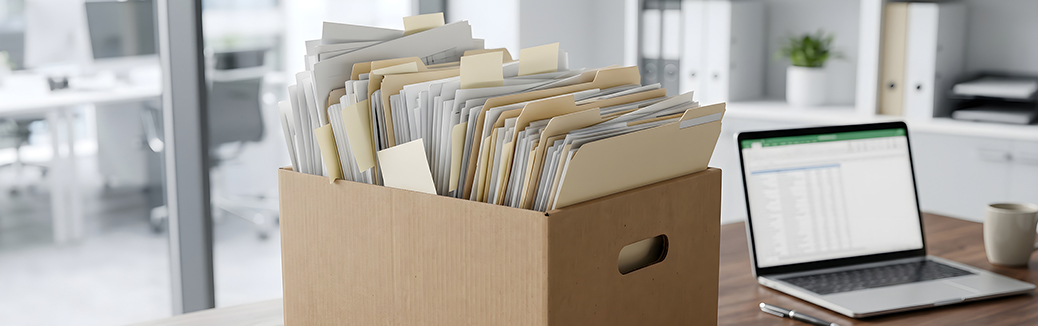
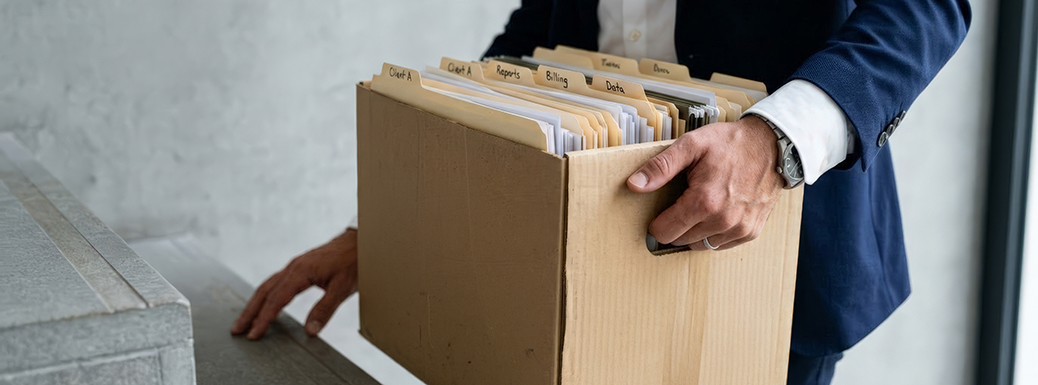
Accountants shudder at the infamous “shoebox full of receipts.” For bookkeeping, that’s a nightmare, and rightly so. But for your personal household, this seemingly chaotic approach is exactly the method that actually works – and that you’ll still be keeping up three months from now.
So here’s your explicit permission: you’re allowed to make it easy. You’re allowed to use a shoebox. You don’t have to sort.
Why this works so well is explained by the following four rules. They’re deliberately kept simple – because the real sticking point with the paperless home isn’t the setup, it’s sticking with it. The less effort a method demands, the more likely it is to survive everyday life.
Rule 1: File chronologically instead of sorting by topic
This is the most important rule, and it sounds almost too dull to be true. Instead of sorting your mail by topic, you simply file it by date: new things go in the front, older ones slide toward the back. Done. No thinking, no folder logic, no categories.
The objection is obvious: “But then I’ll never find anything again!” In practice, that’s not true. Because for the vast majority of documents, you roughly know when something happened. The repair invoice? That was shortly after your summer vacation. The letter from the insurance company? It came in the spring, when you moved. You’re not searching for a topic – you’re searching for a time frame, and you usually have that in your head.
On top of that: you’ll almost never need most of it again anyway. The utility bill from two years ago, the bank statement from last quarter, the confirmation of an order long since completed – all of it lands in the folder and is never touched again. It simply isn’t worth investing time in perfectly filing documents you’ll most likely never go looking for.
Rule 2: Throw away instead of hoarding
A chronological folder has a wonderful side effect: when it gets full, you can simply pull out the oldest few inches at the back and toss them in batches. Utility bills, old bank statements, confirmations of completed transactions – none of that has any lasting relevance in your personal life.
Many people hoard paper out of a vague sense of security: “What if I do end up needing it?” But ask yourself honestly when you last needed a two-year-old utility bill. For most personal documents, the answer is: never.
A practical note: don’t just toss documents with personal data into the recycling bin – shred them, or at least tear them up thoroughly. This goes especially for anything with account numbers, addresses or insurance details.
Rule 3: A single box for the genuine originals
“Paperless” is never one hundred percent – and being upfront about that is part of the honesty here. There’s a small group of documents that have to be kept in the original, because a scan won’t replace them:
- Birth certificates and marriage certificates
- Notarized documents
- Diplomas and certificates
- Certain insurance policies and contracts
- Deeds and documents relating to real estate, inheritance or pensions
A special case is your will: it shouldn’t sit loose in a box at home, but ideally be kept somewhere safe and findable – with your attorney, in a safe deposit box, or wherever your state allows for proper safekeeping. The point is that it can actually be located when the time comes, and doesn’t get lost. At most, a copy or a note about where the original is kept belongs in your box.
The remaining documents go into a single box. No subfolders, no dividers – one box, in a fixed, secure place. That’s the small, honest remainder that simply doesn’t go digital. And because there are so few, this box is quick to search through even in an emergency.
Rule 4: The same lazy logic, digitally
Now for the actually “paperless” part – and here comes the biggest relief: you don’t have to digitize your entire archive. Scan only what you actually need fairly often.
That’s usually:
- Active contracts (phone, internet, lease)
- Warranties and purchase receipts for more expensive devices
- User manuals you keep digging up
- Documents you want to be able to access on the go
The rest – your entire old-paper archive – you simply leave in the chronological folder from Rule 1. It isn’t worth running hundreds of old receipts through the scanner when you’ll never look at them again anyway.
And now the crucial point for the digital approach: searchability beats folder structure. Even digitally, you shouldn’t fall into the sorting trap. A “digital shoebox with a search function” is far better in everyday life than a perfectly branched folder tree that you stop maintaining after two months.
The technical key to this is called text recognition, often abbreviated as OCR (for “optical character recognition”). Put simply: when you scan a document, at first it’s just an image – your computer sees a photo, not text. Text recognition converts that image so that the text it contains becomes searchable. You save the document as a searchable PDF file, and later you can search for “Verizon,” “warranty” or “refrigerator” instead of clicking through folders.
Many modern scanning apps for your smartphone and many PDF programs handle this text recognition out of the box – FlexiPDF included, of course. You don’t have to be a pro – all that matters is that your documents end up filed in a searchable form. After that, you barely have to think about naming and filing at all: the search will find it.
The real point of failure, as mentioned, is sticking with it – not the setup. So once more: as little effort as possible. Better a searchable “Contracts” folder that everything gets tossed into casually than an elaborate system that lies fallow after three weeks.
The whole thing in one sentence
Make it easy on yourself: chronology instead of order, tossing instead of hoarding, searching instead of sorting – and a single box for the genuine originals.
This isn’t a glossy system you can show off with on Instagram. But it’s one you’ll actually keep up – and that’s where the whole difference lies. The perfectly sorted folder tree you give up on after four weeks does you no good. The dull chronological stack you hold onto effortlessly for two years is worth its weight in gold.
How do you handle the paper – already mostly paperless, or does the stack reliably grow back? What’s the one thing that lands in your originals box that absolutely can’t be missing? And the classic worth weighing in on: shoebox or folder structure? We’re looking forward to hearing about your experiences in the comments.

