

Summarize
Graeme StrachanAugust 25, 2026, 6:00am
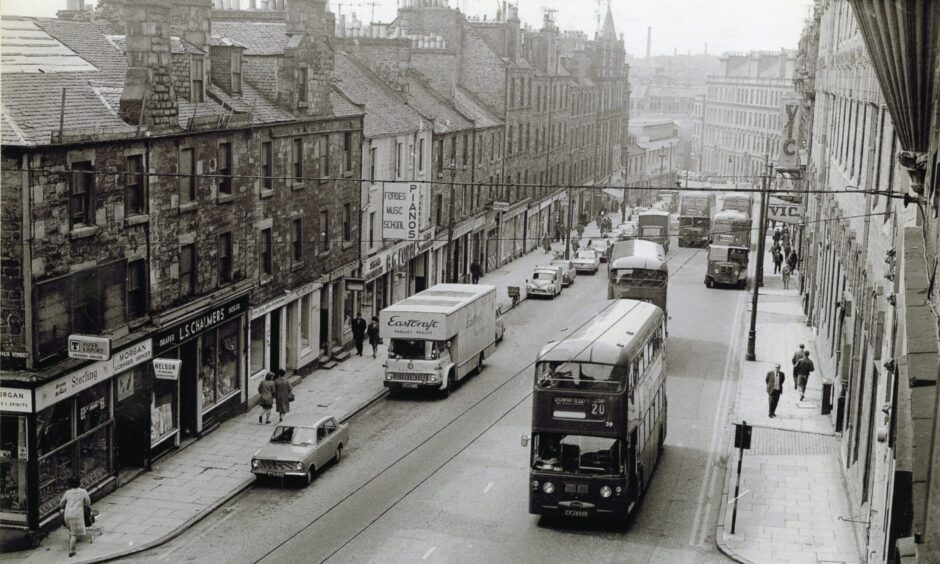
Take a trip back to 1960s Dundee with this gallery of bus photographs.
While the buses are the stars of the show, there’s plenty to see in the background too, including the Royal Arch and other landmarks that have long since vanished.
From conductors and paper tickets to packed upper decks, these photographs offer a glimpse of a very different Dundee.
Whether you remember those days or not, this journey is well worth the fare.
Snowbound city
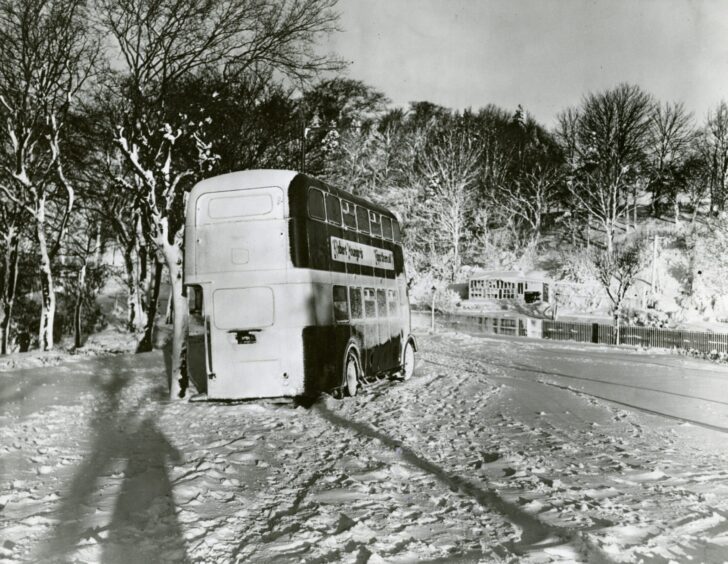
Heavy snowfall brought Dundee to a standstill in January 1960.
This school bus got stuck at Balgay before it could pick up any pupils.
For plenty of Dundee youngsters, it was the perfect excuse for turning up late, or not making it to school at all.
Icy crash
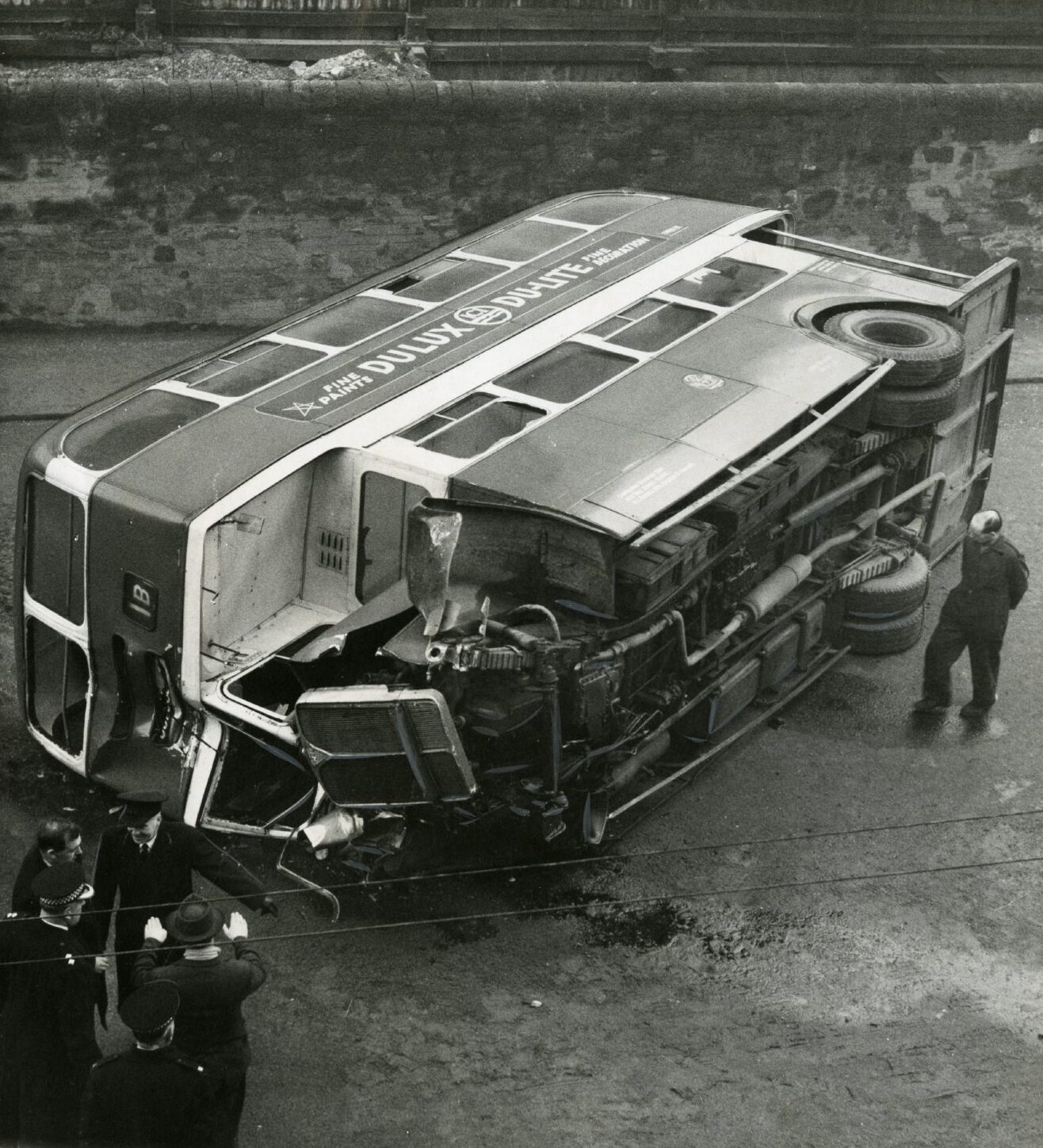
A double-decker bus from St Mary’s skidded on a frosty road, hit a lamp-post, struck a wall and overturned in Dens Road in January 1960.
The impact tore off its front wheels, smashed the windscreen and several windows.
The driver needed 11 stitches, but the 12 passengers escaped serious injury.
Snowy struggles
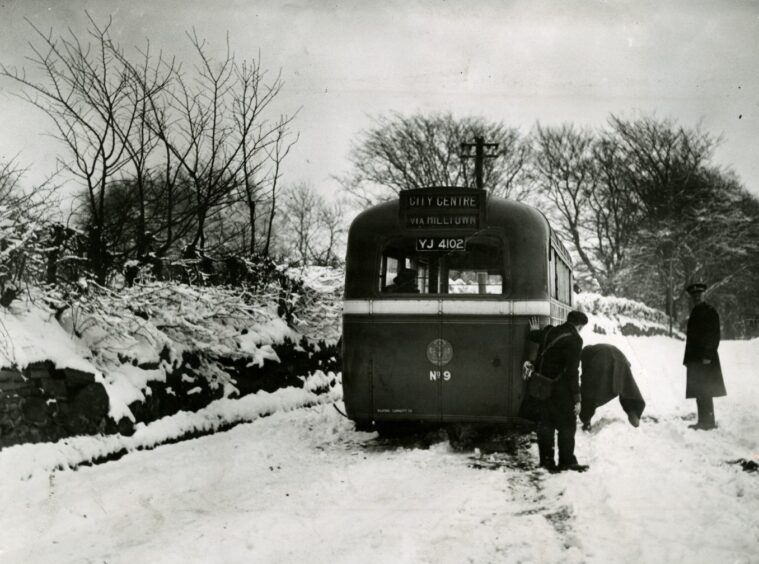
The conditions got the better of this Dundee Corporation bus in January 1960 as heavy snow and ice made Old Glamis Road hard going.
The No. 9 was on its way to the city centre via the Hilltown and eventually got moving again after hot ashes were spread under the wheels to give it some traction.
Familiar view
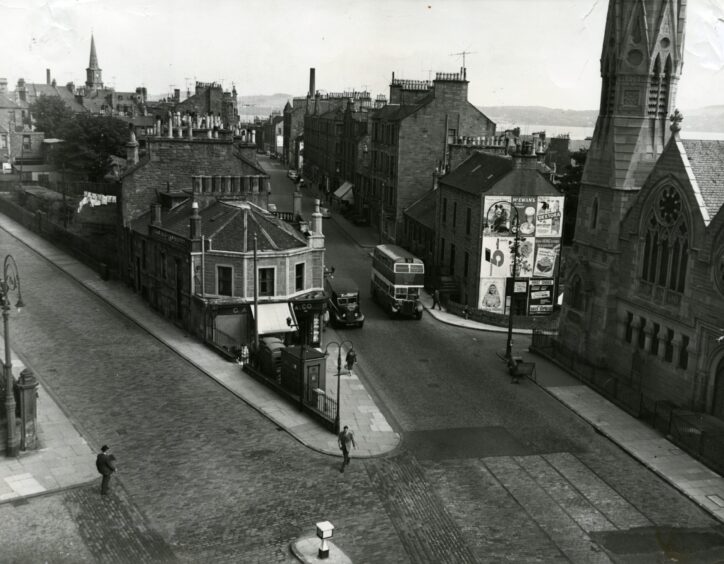
A double-decker bus heads up Perth Road in August 1960.
The Sinderins area remains remarkably recognisable despite the passing years.
A Keiller’s van can be seen alongside the bus, while billboards advertise Player’s cigarettes, McEwan’s Export and Dextora energy drinks.
Balunie Avenue
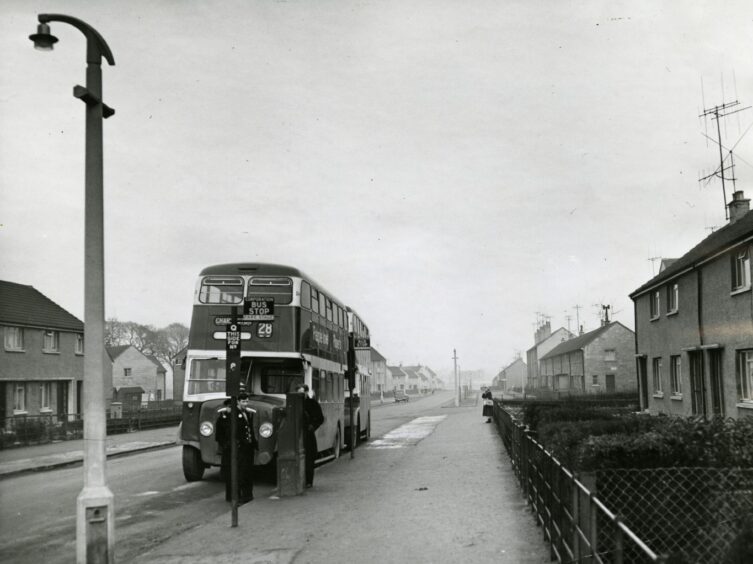
Three Dundee Corporation Transport staff stand beside a No. 28 bus bound for Charleston at Balunie Avenue in January 1961.
With another bus parked behind them, there was little sign of life.
Royal Arch
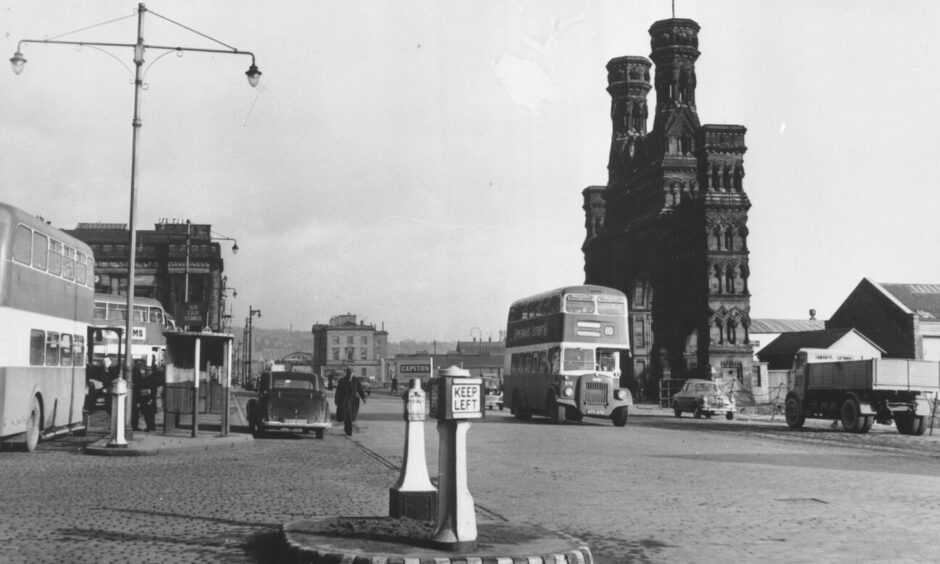
Dock Street looking east in February 1961, with the Royal Arch on the right and the Shore Terrace bus stances on the left.
The Royal Arch was already living on borrowed time.
After more than a century overlooking the city’s waterfront, it was demolished in March 1964 to make way for the Tay Road Bridge approach roads.
Coupar Angus Road
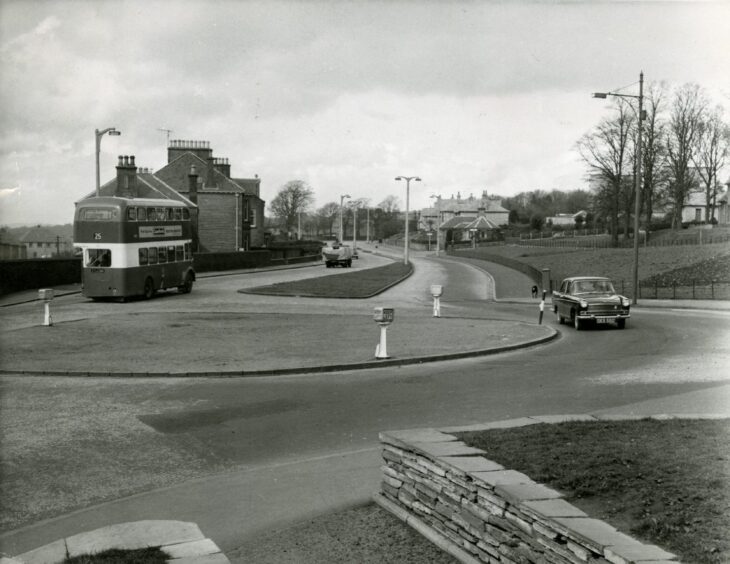
A bus makes its way along Coupar Angus Road in April 1961.
The rear-entrance double-decker is very much of its time.
The circle is still there today, although the road is rarely this quiet.
Marchbanks Depot
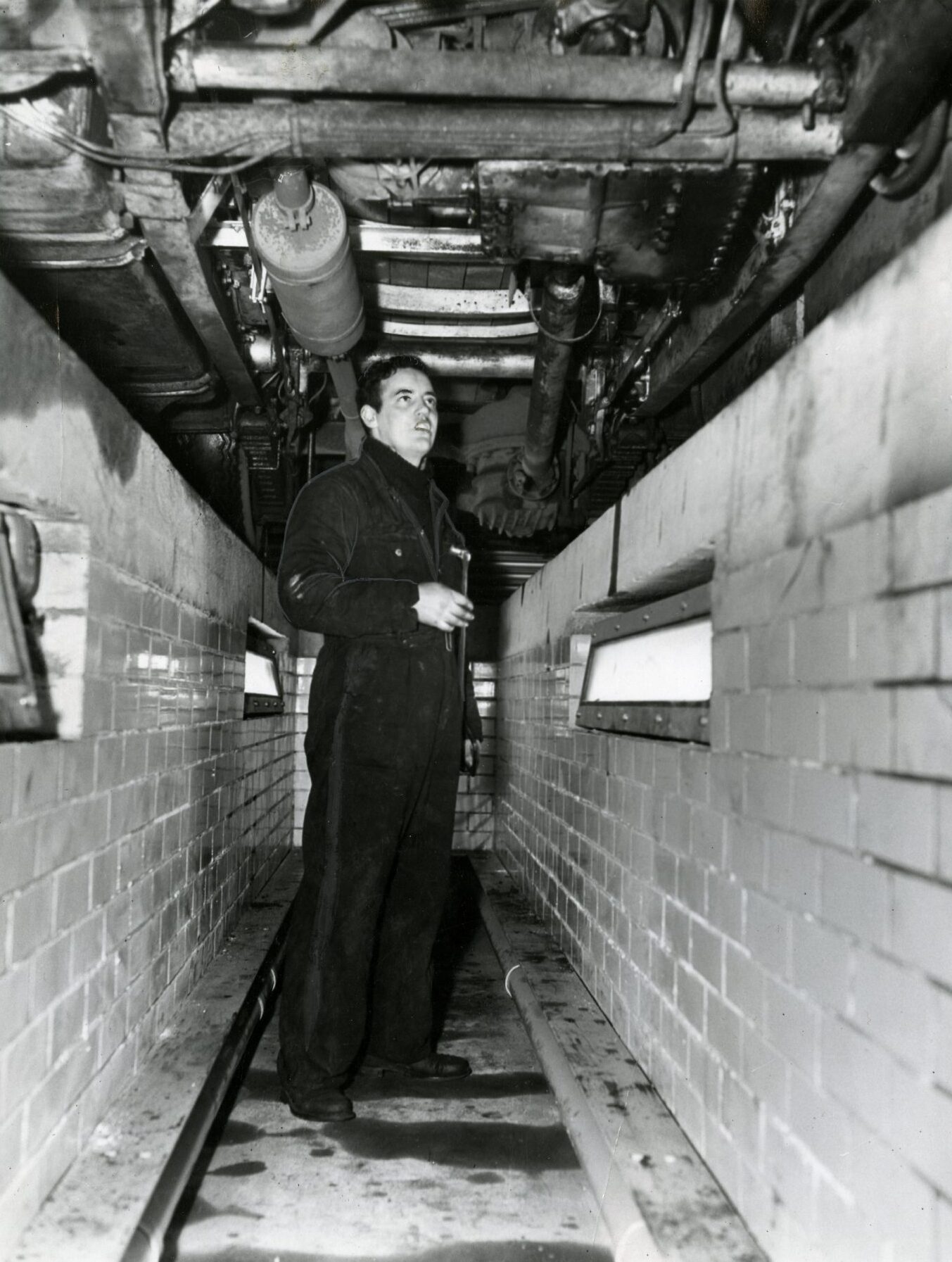
Marchbanks Transport Department Depot in December 1961, with a mechanic working beneath one of the buses in the inspection pit.
The new £85,000 depot had only recently opened.
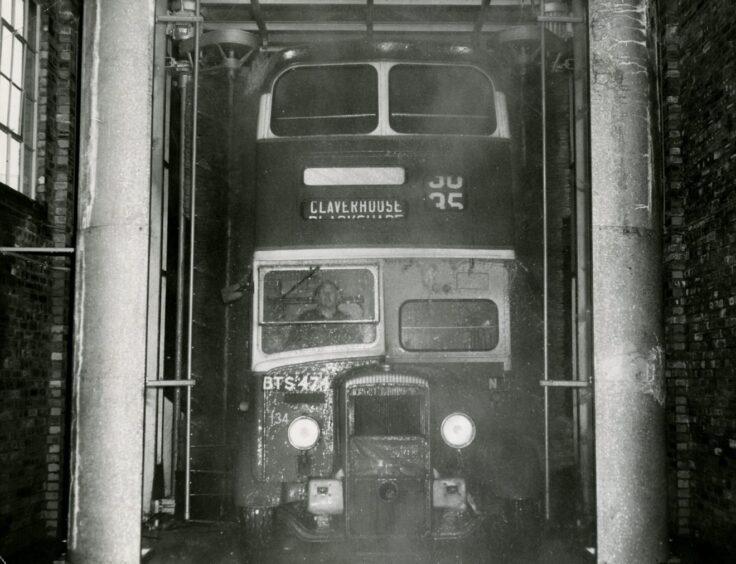
One of Dundee’s double-deckers gets a wash at the Marchbanks depot.
The depot had space for 99 vehicles when it opened.
At the time, the city’s bus fleet numbered 245 vehicles.
Dickson’s Travel
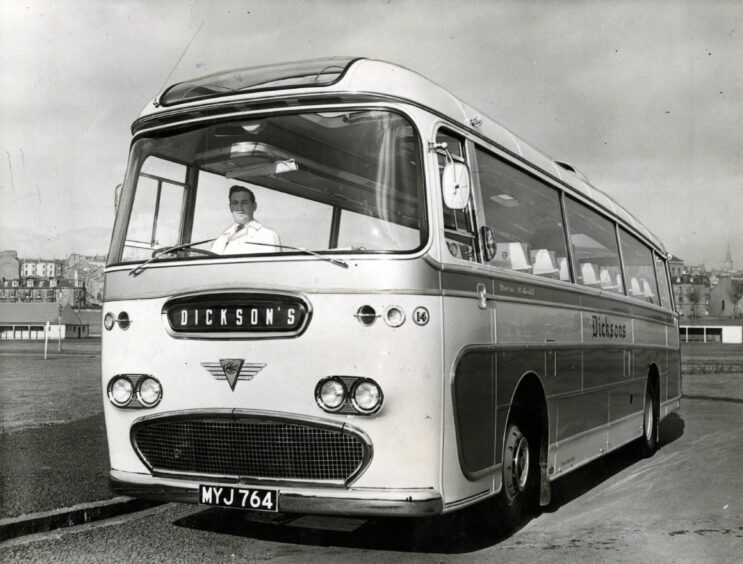
Dickson’s Travel shows off its new single-decker coach in April 1962.
The company opened a booking office in Reform Street opposite Bank Street during the 1950s and was the first in Dundee to run coach tours to Europe.
Its coaches were based at a garage in Dundonald Street.
Later that year they carried Dundee fans across Europe as the Dark Blues made their memorable run to the European Cup semi-final.
Murraygate
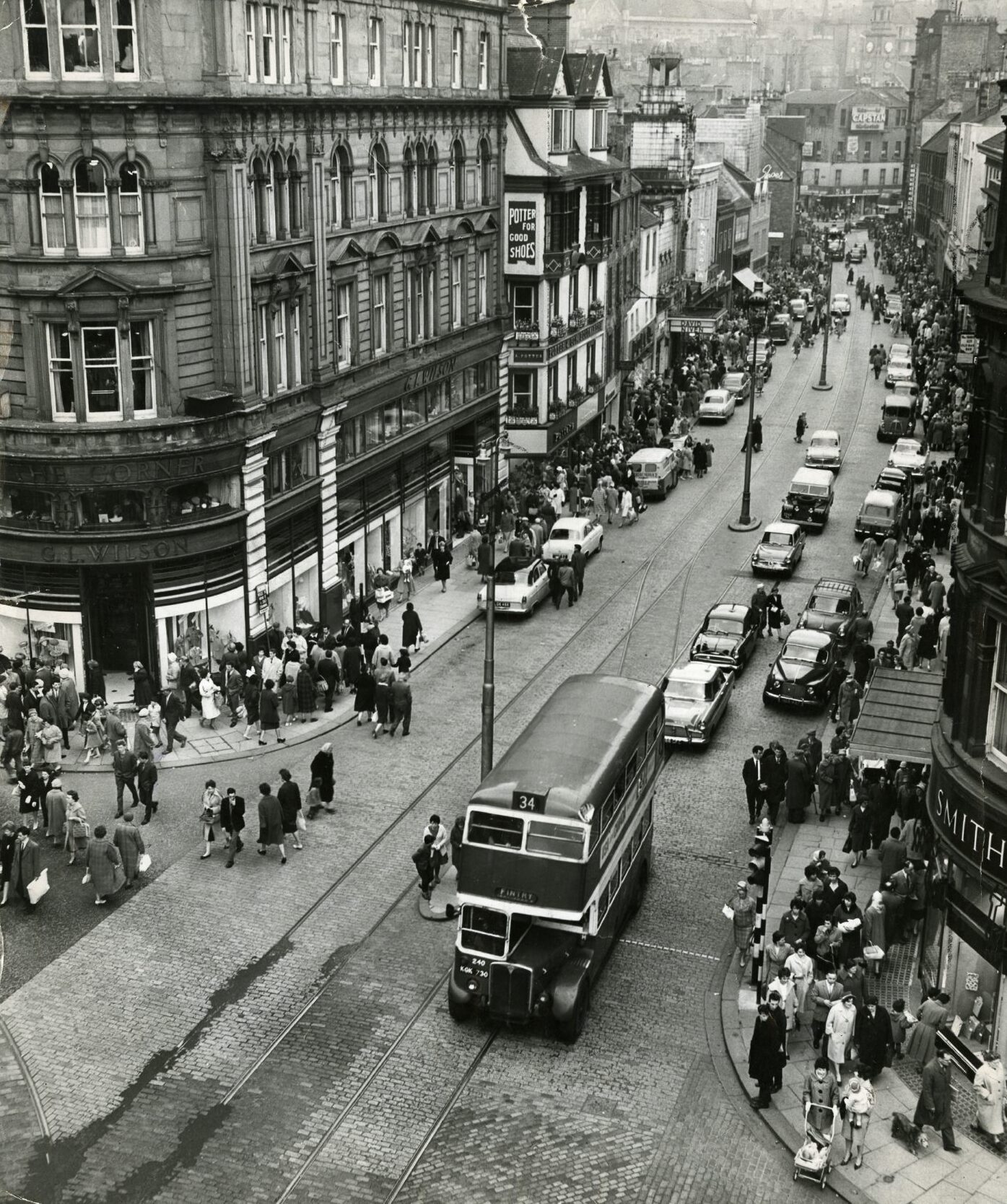
An overhead view of the Murraygate, which was busy with shoppers, traffic and a No. 34 bus bound for Fintry in May 1962.
Tramlines can still be seen along the cobbled street.
Shops and businesses line both sides of the road, including G.L. Wilson, Potter’s shoe shop and the La Scala cinema, which was advertising a David Niven film.
Shore Terrace
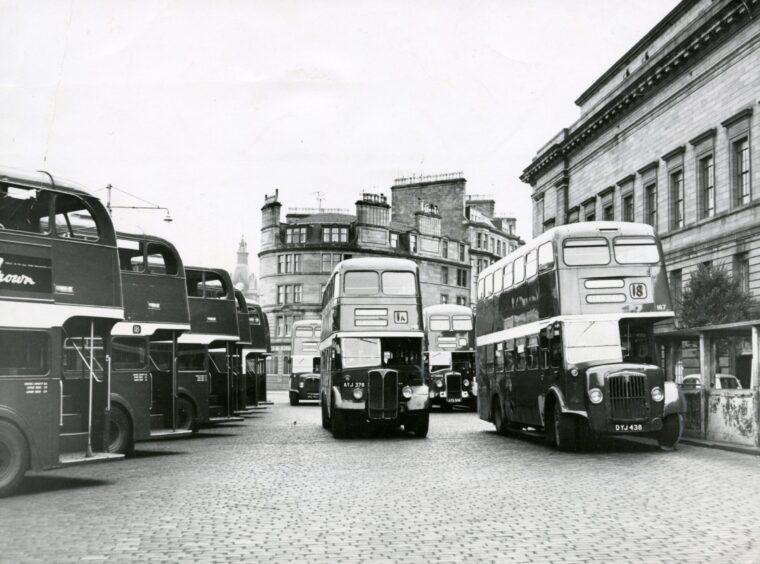
A view of the buses and stances at Shore Terrace in October 1963.
The cobbled area behind the Caird Hall on Dock Street was the starting point for many of the city’s bus services.
It closed in March 1974 to make way for Tayside House, though many still argue the buses should never have been moved.
New buses
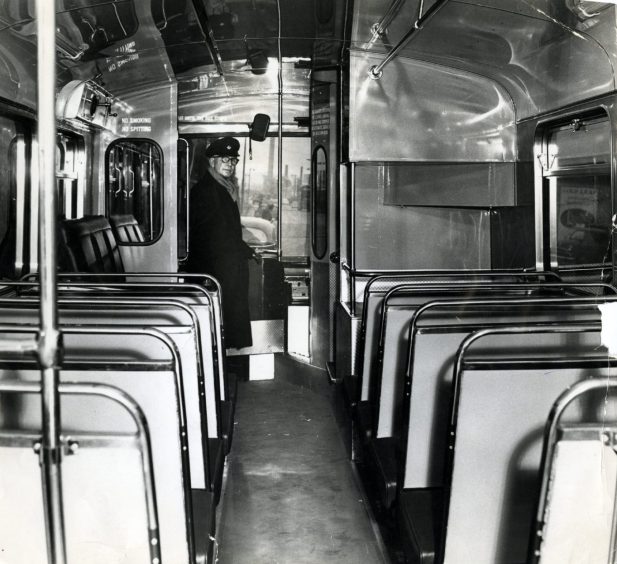
A look inside one of Dundee Corporation’s new buses in December 1964.
Twenty of the vehicles were about to enter service at a time of rising costs and concerns over another fares increase.
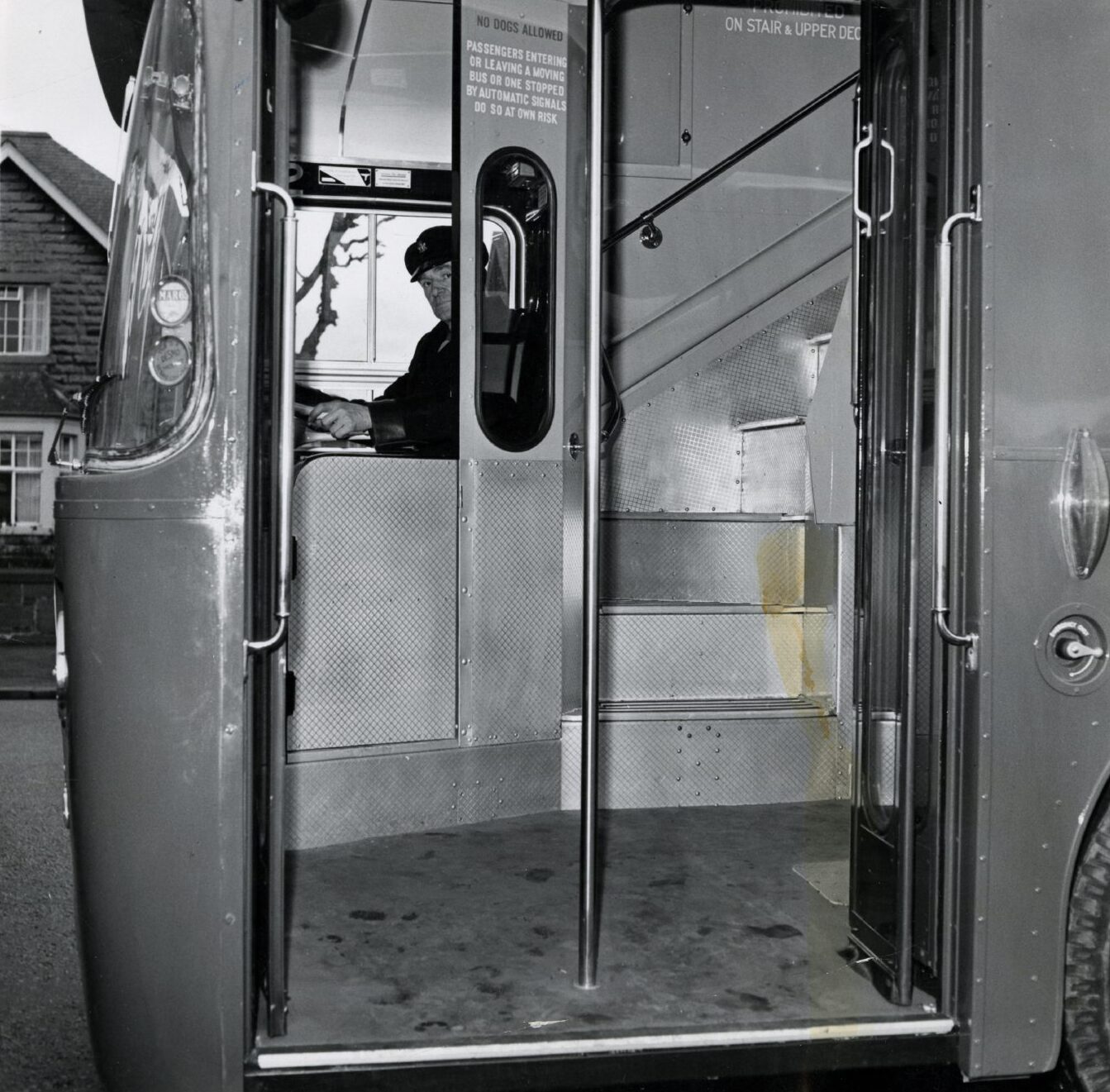
Modern interiors greeted passengers.
These buses would become a familiar sight for decades.
Balgillo Road
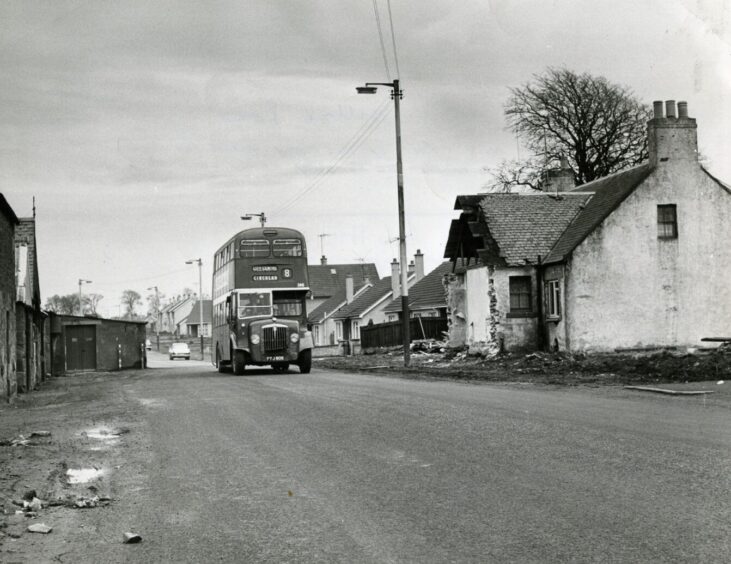
A “circular” bus heading through Balgillo Road in April 1965.
Part of a farm house on the right was being demolished to widen the roadway.
Albert Street
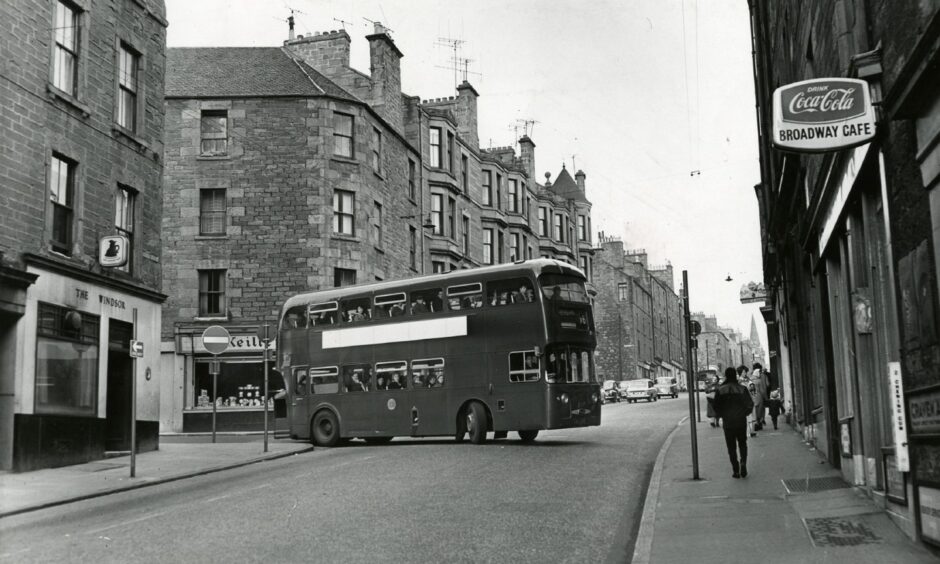
A bus turns into Albert Street in March 1965.
The Windsor Bar can be seen on the left.
The Broadway Café stood across the road.
One-man buses
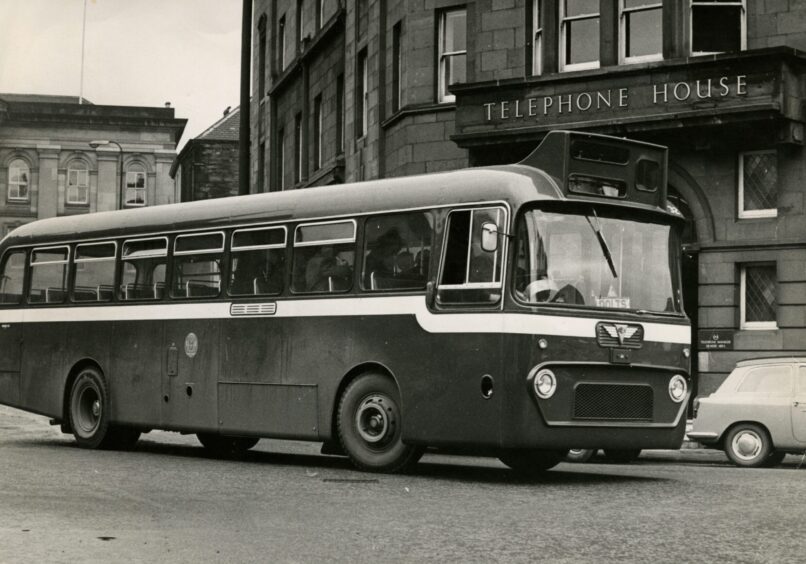
The first of ten one-man buses ordered by Dundee Corporation Transport Department was delivered at a cost of £57,000.
In this photograph from February 1966, one of new buses is being tested on the streets of Dundee as it passes Telephone House in Ward Street.
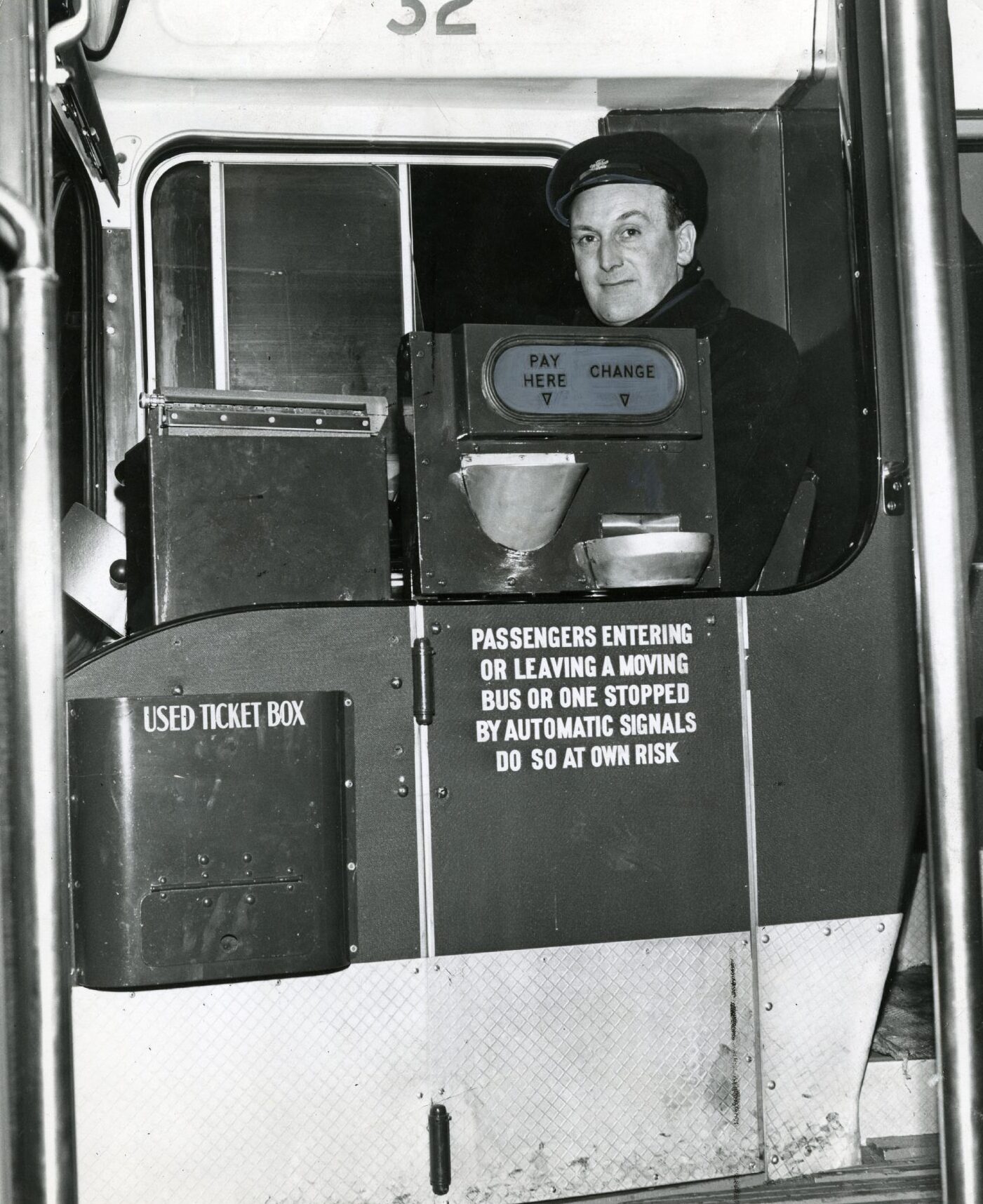
The buses were single-deckers with a front entrance and exit.
However, union concerns over conductor redundancies delayed their introduction, leaving the new vehicles stuck in the garage.
St Mary’s Road
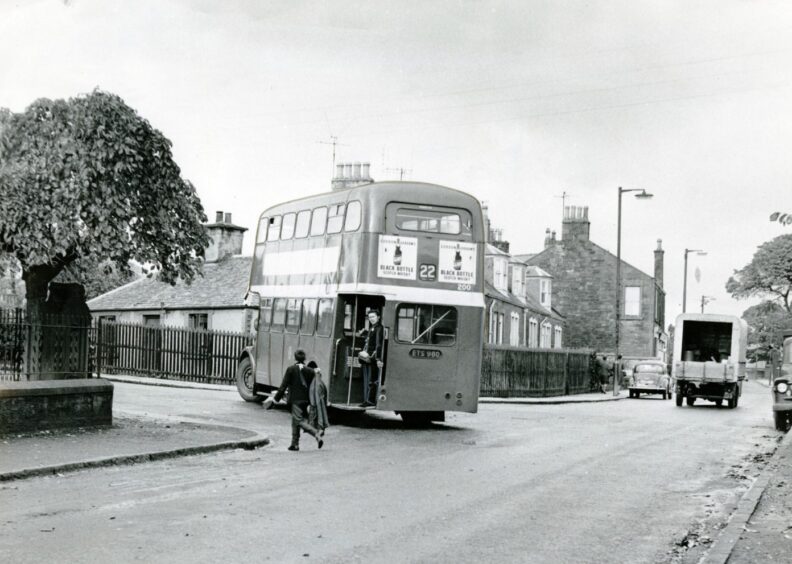
The No. 22 bus was pictured turning into St Mary’s Road at the junction with Cox Street, which was the Downfield terminus, in October 1966.
Was the young man chasing the bus or chatting with the conductor?
More buses roll in
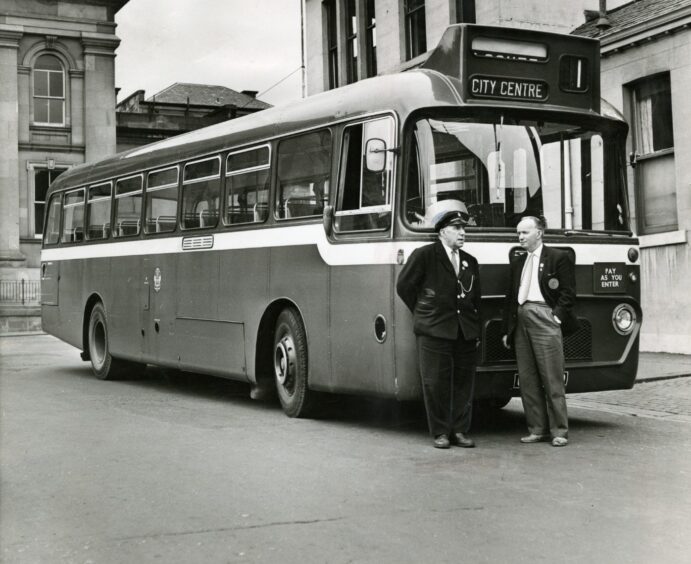
More vehicles increased the city’s fleet of one-man buses in June 1968.
They were painted green with a white relief band.
However, a dispute over pay and working conditions meant there was still uncertainty over when they would enter service.
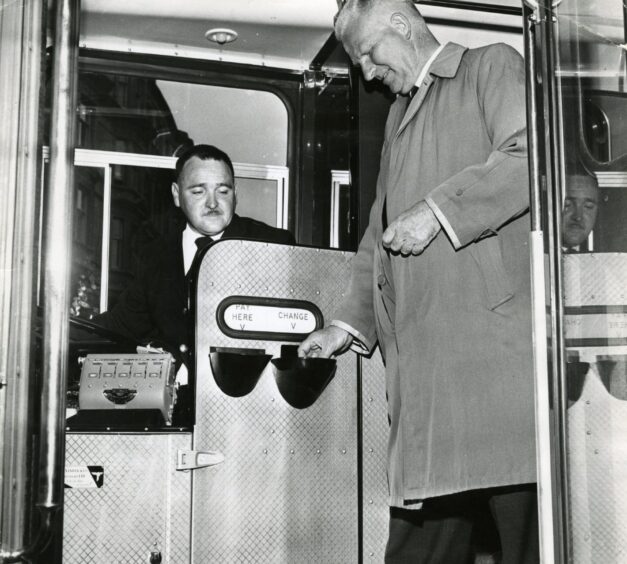
One-man buses finally entered service in Dundee in August 1968.
The Courier joined driver Tom Dailly to see how the new system worked.
However, it was short-lived, with services reverting to a driver-and-conductor operation just four days later after talks with the unions broke down.
Pamela Scott
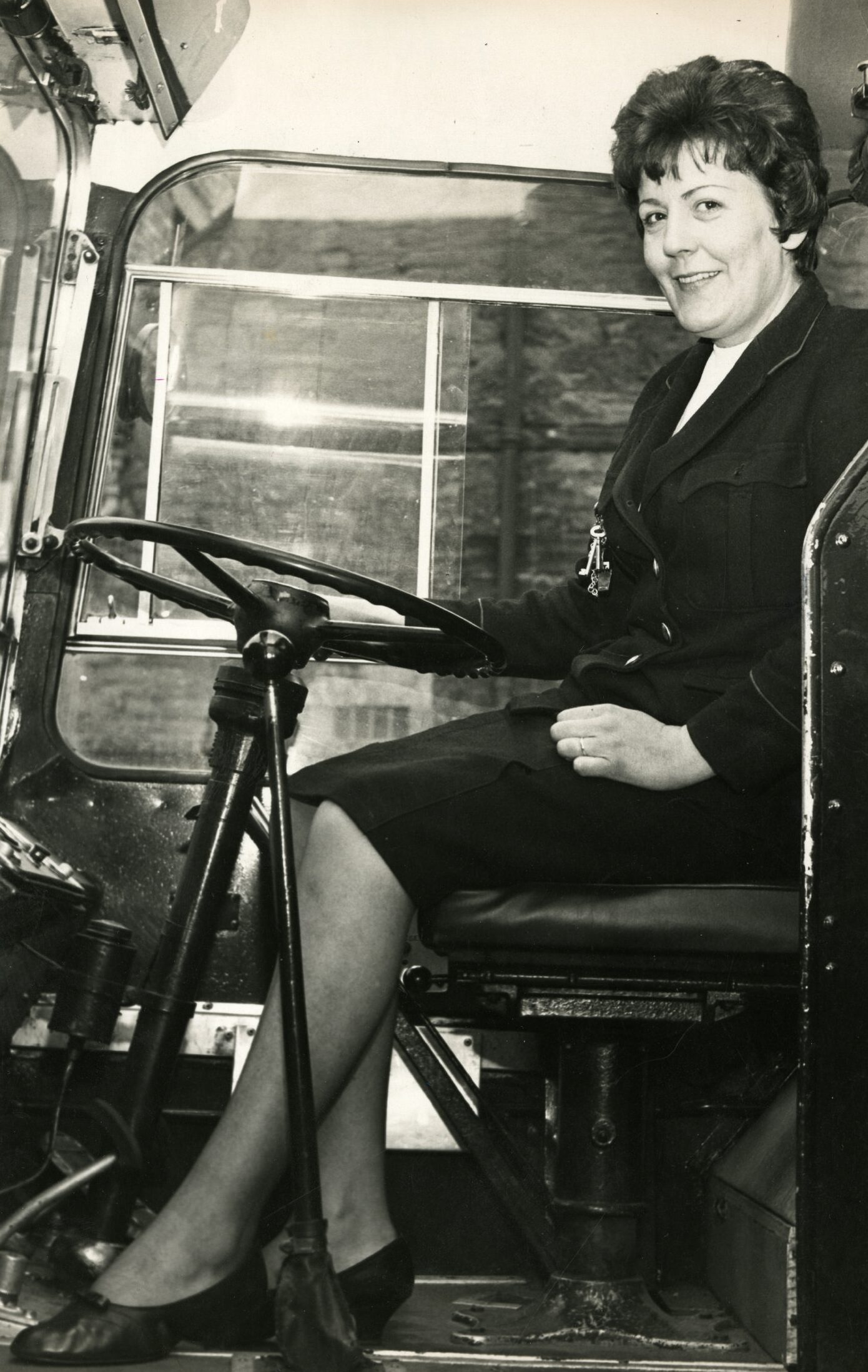
In May 1968, “clippie” Pamela Scott made historyby becoming the first woman in Scotland to gain a Public Service Vehicle (PSV) licence.
She was due to drive buses between Dundee and Leuchars for Alexander and Sons, but male colleagues threatened strike action.
Instead, Pamela went on to work as a limousine driver for the firm, chauffeuring “VIPs” including Enoch Powell and Paul McCartney.
The image brings our tour of the city’s buses in the 1960s to its final stop.

