The right questions to ask about payments


Digital Money held their forum in London, and the presentations are now online (middle left – presentations – speakers). For more detail on the decks, go to the wiki. Here are insights from the leaders in the new payments space, and Banks must listen, and think about the implications. Its a unique opprtunity to see data on Paypal, and thoughts from emerging leaders including Vodaphone, Mi-Pay, Tesco, and Peppercoin. I noted this page from the Peppercoin deck, which asks a set of higly relevant and strategic questions. Small Payments and mobile based payments Contactless payments, and mobile phone based contactless … Continue reading The right questions to ask about payments

The glib continium – where the good ideas are repressed


This is a fascinating piece from "Creating Passionate Users". Its fascinating because it perfectly articulates how Banks operate. Creating Passionate Users: When only the glib win, we all lose In way too many meetings, the fastest talkers win. And by "fastest talkers", I mean those who are the first to articulate an idea, challenge, issue, whatever. Too many of us assume that if it sounds smart, it probably is, especially when we aren't given the chance to think about it. The problem is, the guy with the "gut feeling"–the one who senses that something's not right, but has no idea … Continue reading The glib continium – where the good ideas are repressed

Consumers like convenience of contactless m-payments, study shows


This is an important study for Banks and credit card companies. Payments using contactless cards are merely held over the payment device, versus the traditional method of "dipping" the card into the device, similar to an ATM. Finextra: Consumers like convenience of contactless m-payments, study shows Consumers like the convenience and ease of making transactions with their mobile phones, according to a new usability study of near field communication (NFC) and contactless payment technology released by Royal Philips Electronics and Visa International. The conventional view has been that cards would transition from mag stripe plastic into chip plastic, then evolve … Continue reading Consumers like convenience of contactless m-payments, study shows

Yahoo Japan enters the banking world


Interesting development, that Yahoo have not done elsewhere.  They have tended to partner in other countries, but Yahoo Japan does operate under a different model. Finextra: Yahoo Japan confirms net banking stake Yahoo Japan confirms net banking stake Yahoo Japan has confirmed that it is buying a stake in Japan Net Bank, the online banking subsidiary of Sumitomo Mitsui Financial Group. Financial terms of the deal were not disclosed. Under the deal Yahoo will acquire 14.9% of a new holding company for Japan Net Bank. Sumitomo Mitsui’s core commercial banking unit will transfer its 57% stake in Japan Net Bank … Continue reading Yahoo Japan enters the banking world

Aggregation – an idea whose time has come?


Before the dot come crash, Aggregation was all the rage amongst banks, and they were falling over themselves to get into it. Then the research started to come in, indicating consumers were cool to Aggregation, and in particular if there was going to be any “advertising” associated.  Then the crash happened, and Aggregation waned. Aggregation, is the ability to pull information from more than one institution, into one single view.  Best known for this is Yodlee. Yodlee All Yodlee solutions are powered by a patented technology, known in the industry as Account Aggregation, which is built into the Yodlee Platform. … Continue reading Aggregation – an idea whose time has come?

More detail on the NACHA pilot for online debit transactions


Additional detail from financetech on the NACHA pilot which we noted a few days ago. NACHA Takes a Page From PayPal's Playbook The process sends transactions on a round-trip. When consumers at an online retailer, for example, click on the "buy" button, they are redirected via a secure network (courtesy of Sydney-based eWise Systems) to their banks' Web site where they are asked to log in. Logging in will presumably be with the exact same method the banks ask their customers to log in for banking services, relates Herd. The consumer confirms the transaction details at the bank site and … Continue reading More detail on the NACHA pilot for online debit transactions

Banks set up text, email fraud alerts for customers


Customer loyalty has been established by face to face relationship in the past.  With the advent of internet, and pervasiveness of electronic theft, and multiplicity of payment methods nowadays customers want greater attention paid to their spending patterns and many want control over unusual amounts, or significant changes in their accounts. Enter automated alerts, customised to the their preferences, that provide the assurance of confirming customers activity, and importantly notifiying them immediately of anything that was not them. Banks set up text, email fraud alerts for customers – Financial Services – Breaking Business and Technology News at silicon.com The threat … Continue reading Banks set up text, email fraud alerts for customers

MySpace and why Bankers should study it carefully


This may look off topic to traditional bankers, but bear with me here. I cross post this from my Web Lifestyle blog, because this is a living demographic shift that we had better understand.

I work in the middle of online banking, and yet this post from Alexa (pasted below) is worth studying, and filing for reference next time you are in a planning session.

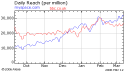
Alexa studies web trends. They deal in facts. Fact: MySpace is in the top 10 of all web sites in the world. The user base are all teenagers.

graph.png

Now look at MySpace compared to CNN. MySpace have overtaken CNN just last month.
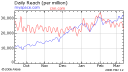
cnn graph.pngbbc graph.png

The issue isn’t that MySpace is bigger than CNN. The issue is that they are so diametrically different. You watch CNN (or BBC) and they watch MySpace. It doesn’t matter because MySpace overtook both last month. (Note MySpace is blue in both cases).

Just as us boomers see things different than our parents you can bet the MySpace generation will act similarly relative to us. The next generation expect a degree of informatlity, of randomness, and simplicity – just make it so!
We had better not be building the same boring bank web sites that we do today, and here are some examples.

Relevance to Bankwatch:

Today

  • static pages
  • bank defined
  • Lowest browser level
  • Assume dial up
  • Replicate branch info

Future

  • evolving screen (read Ajax and beyond)
  • customer defined
  • maximum browser level
  • Assume maximum bandwidth
  • Value add – eg free spending assessment *

* Wells Fargo already have this, today, 2006, with a view to GenYers needs. Don’t make me think about it- just give it to me!
____________________________________________

From my other blog www.2036ad.com

MySpace – the James Dean/ Mick Jagger of 2006

MySpace is fascinating, and this is one of the most prescient posts I have seen for a while. This from Alexa sums it up so beautifully:

If you go to MySpace, you will probably walk away with the impression that it is a joke… some kind of junkyard of personal pictures, blogs and random stuff clumsily plopped onto the Web. And, unless you are a studious observer of the Alexa Traffic Rankings, you would almost certainly walk away with the impression that it is no big shakes. But you would be dead-wrong.

If you are under 18, move on, because you already get it. Older than that, read on. Read that intro carefully, and consider how my parents felt about Mick Jagger, Eric Burdon, Dylan, and Elvis – well don’t even go there!

But consider today … who are we listening to on today’s TV ads. Cadillac/ Led Zeppelin being the archetypical example. Good grief there is no more irresponsible reprobate than Robert Plant, and the whole group had no respect for anyone around them, either in the music business, or their listeners .. but the music … hmmmm

Alexa Web Search

I think the lesson here is not to discount the kids. They will become the prime Internet demographic in the years to come and they will determine what’s hot and what’s not. Just like with soda, music and movies, the marketing dollars are more interested in my kids than me… and judging from MySpace, the marketers may be right. The kids are a major force on the Web.

So where am I going with all this. MySpace is not understood by those of you who are still reading. Those who get it have gone. So we had better understand what’s happening there, and consider that generation because believe it or not, they will be earning $100K per annum, buying homes, having families, and investing for retirement within 10 – 20 years.

Not a long time in the future in strategic terms, and the brands, sites that attract them soonest will win them. They are loyal, and have pack mentality. Consider the market share of Microsoft, Google, MySpace in their world.

Continue reading “MySpace and why Bankers should study it carefully”

Online Credit Card security and the PSP sector


Good summary of some of the changes developing in the credit card industry.

Relevance to Bankwatch:
The message here is that there is no magic bullet, and despite the several initiative listed here, liability fraud is not eliminated, and liability remains with the card issuer in many situations.

SECPay – Online Credit Card Security and the PSP Sector

Note: About SECPay

SECPay is the UK’s largest independently owned processor of secure, real-time, online credit and debit card transactions. Specialising in the provision of payment services for merchants on the Internet, through Call Centres and for Mail Order Fulfilment Houses. SECPay handles the capture, authorisation and settlement of credit and debit card payments and all the associated electronic and physical security required.

Despite the early fears surrounding e-commerce transactions, using credit cards online has become safer due to the steps taken by key industry members. Chris Dipple, Technical Director at leading real-time payment service provider, SECPay, explores how online credit card security has improved and what still needs to be done to ensure all online credit card transactions are as secure as possible.According to the IMRG, Internet Shopping is expected to be worth around £17 billion in the UK this year, representing around 7% of all retail sales. The IMRG predicts that 400 million orders will be made by the UK’s 16 million internet shoppers. With this phenomenal level of financial transactions, online payment methods have evolved significantly over the last decade.

Continue reading “Online Credit Card security and the PSP sector”

“Madness!” “Outrageous!” “How’s this help the rich?” (New Washington Mutual campaign)


So even though their web explanation isn’t clear, this advertising campaign to support WAMU’s new account is brilliant, and should resonate with consumers.

This is what I would have expected from WAMU.

Relevance to Bankwatch:

Banks have a long way to go to truely think and act in the best interests of consumers. Thinking like a bank is not how you get inside the minds of consumers. Time to clean out some of the traditional banker types in HQ.
Washington Mutual Launches National Advertising Campaign in Support of Its New WaMu Free Checking(TM) Account, Stirs Up the Industry

SEATTLE–(BUSINESS WIRE)–March 13, 2006–Washington Mutual, Inc. (NYSE:WM) Humorous Approach Takes on ‘Stodgy’ Banking Industry to Cries of ‘Madness,’ ‘This is Outrageous'”Madness!” “Outrageous!” “How’s this help the rich?”

There hasn’t been this much commotion in the marbled halls of banking since the bars were removed from teller cages. What’s got old-fashioned bankers from NYC to LA chomping their cigars to a nub?

Washington Mutual’s at it again.

The bank today launches a national advertising campaign supporting a new free checking account that’s got bankers (at least the ones in the ads) fuming over the unprecedented bundle of free features.

Continue reading ““Madness!” “Outrageous!” “How’s this help the rich?” (New Washington Mutual campaign)”