
Morning Briefing — Tuesday, 9 June 2026 · 08:00 EST · ~1,250 words


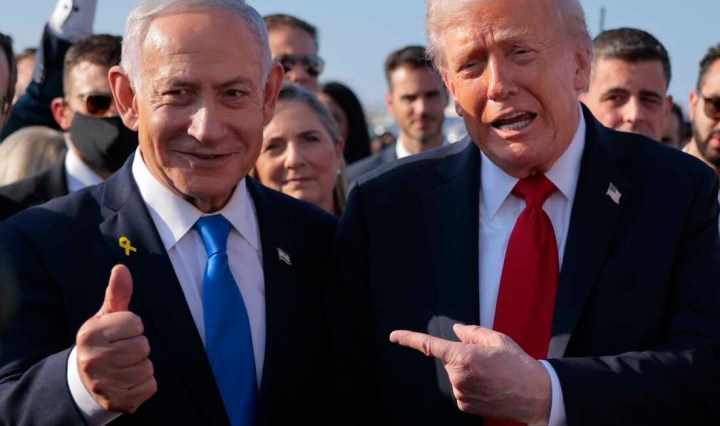
Today’s environment is dominated by a single clustered risk: the April ceasefire is visibly fracturing. Israel and Iran traded direct missile fire for the first time since the truce took effect, the Lebanon front escalated sharply with Tyre now under full evacuation order, and the Trump-Netanyahu relationship broke into public view as a genuine divergence rather than tactical noise. Against that backdrop, the EU moved on two fronts — sanctioning the IRGC over Hormuz and launching its Tech Sovereignty Package — and a US court struck down a major immigration policy with immediate implications for the technology sector. Oil inventories … Continue reading Morning Briefing — Tuesday, 9 June 2026 · 08:00 EST · ~1,250 words
Morning Briefing — Monday, 8 June 2026 · 06:48 EST · ~1,150 words


Today’s environment is dominated by the Hormuz ceasefire fraying at the edges — Iran launched ballistic missiles and drones toward Gulf states and the strait over the weekend, and the US intercepted most of them while striking Iranian coastal radar sites in return. The Lebanon track is simultaneously deteriorating: a Washington-brokered Israel-Lebanon deal is on paper but Hezbollah has rejected its terms outright, leaving it dead on arrival. The EU’s tech sovereignty package (released June 3) and the Trump AI executive order (June 2) provide the week’s structural tech-policy anchors. The overall tone is one of managed escalation with no … Continue reading Morning Briefing — Monday, 8 June 2026 · 06:48 EST · ~1,150 words

Morning Briefing — Saturday, 6 June 2026 · 09:22 EST · 1,180 words


Today’s briefing is dominated by a live military exchange at the Strait of Hormuz — Iran fired drones toward the strait overnight, the US intercepted them and struck two Iranian radar sites, and Gulf states activated air-raid sirens. That direct exchange lands against a backdrop of fragmenting ceasefire diplomacy: the Lebanon truce is wobbling after Hezbollah rejected an Israel-Lebanon agreement, US-Iran talks remain publicly contradicted on both sides, and the OECD has this week formalized the economic damage. On the economy, Friday’s May jobs report beat expectations sharply — a useful counterweight. On AI, Trump signed a new executive order … Continue reading Morning Briefing — Saturday, 6 June 2026 · 09:22 EST · 1,180 words

Bank dropped Churchill after being told he was ‘elitist’


Historical figures such as Turing and Austen replaced on notes after research concludes they are ‘contentious and divisive’ Emma Taggart Economics Reporter. Nick Gutteridge Chief Political Correspondent 05 June 2026 8:00pm BST The Bank of England axed historical figures such as Winston Churchill from banknotes after being told they were “elitist and divisive”, The Telegraph can reveal. Research commissioned by the Bank concluded that figures such as Churchill, Alan Turing and Jane Austen were “contentious and not representative of the UK’s cultural and natural diversity”. Officials were advised to replace portraits with images of nature on banknotes because historical figures represented “a backward-looking vision of … Continue reading Bank dropped Churchill after being told he was ‘elitist’

Major Japanese cybersecurity firm to join Anthropic AI project


8 hours ago A major Japanese cybersecurity firm says it will be granted access to the latest AI model developed by US tech startup Anthropic. Trend Micro, based in Tokyo, on Thursday announced its participation in Anthropic’s Project Glasswing, an initiative aimed at countering cyberattacks using Mythos. US IT and financial giants are also taking part in the program. The Japanese company said it will use Anthropic’s Claude Mythos Preview. It plans to incorporate the technology into its services and systems to strengthen the rapid detection of domestic software vulnerabilities and responses such as program fixes. Experts say Claude Mythos … Continue reading Major Japanese cybersecurity firm to join Anthropic AI project

The Key Sticking Points for a US-Iran Peace Deal


Patrick SykesJune 5, 2026 at 5:24 AM EDTUSS Rafael Peralta, right, during US blockade operations near an Iranian-flagged ship, in April. https://www.bloomberg.com/news/articles/2026-06-05/iran-us-peace-deal-why-hormuz-lebanon-nuclear-enrichment-are-sticking-points The US and Iran have been locked in a stalemate since agreeing to a ceasefire in April. They’ve been unable to reach a deal to end a monthslong war that has killed thousands of people and sparked a global energy crunch. Tensions are high as Iran maintains a tight grip on shipping through the Strait of Hormuz and the US refuses to lift its naval blockade on Iranian-linked vessels. The two sides have continued to exchange strikes, even as President … Continue reading The Key Sticking Points for a US-Iran Peace Deal

Morning Briefing — Friday, 5 June 2026 · 07:39 EST · ~1,250 words


Today’s environment is defined by one dominant cluster — the US-Iran war and its cascading diplomatic wreckage — and two structural sub-themes competing for attention: Europe’s forced acceleration toward defence autonomy, and a US economy navigating a K-shaped recovery on Jobs Day. The Lebanon-Hezbollah thread is deteriorating faster than the Iran framework can absorb it, and the EU launched its most significant industrial policy intervention in years. The overall tone is one of compounding instability across interconnected systems. 1. What Changed Iran–US stalemate hardens as Hormuz remains closedThe ceasefire brokered by Pakistan in April has become a holding pattern punctuated … Continue reading Morning Briefing — Friday, 5 June 2026 · 07:39 EST · ~1,250 words

When AI builds itself


Our progress toward recursive self-improvement, and its implications. For most of AI’s history, humans drove every step in its development cycle. But at Anthropic, we are delegating a growing share of AI development to AI systems themselves, which is speeding up our work. Taken far enough, and given enough compute, that trend points to an AI system capable of fully autonomously designing and developing its own successor. This is called recursive self-improvement. We are not there yet, and recursive self-improvement is not inevitable. But it could come sooner than most institutions are prepared for. Using public benchmarks and previously unreported data … Continue reading When AI builds itself

The EU is attempting to decapitalise its 80%+ dependency on non-EU digital infrastructure by regulating procurement, incentivising domestic production, and legislating cloud sovereignty criteria.


Re from today’s briefing : Why it matters: ⚑ This is a structural break, not an incremental policy. The EU is attempting to decapitalise its 80%+ dependency on non-EU digital infrastructure by regulating procurement, incentivising domestic production, and legislating cloud sovereignty criteria. At the same time, Brussels is acknowledging it is in a three-way technology contest with the US and China. Long-term implications for US hyperscalers (AWS, Azure, Google Cloud) operating in Europe are significant. Renew Europe bloc called it “a step when we needed a leap” — the debate over how binding the measures will be is just beginning.” … Continue reading The EU is attempting to decapitalise its 80%+ dependency on non-EU digital infrastructure by regulating procurement, incentivising domestic production, and legislating cloud sovereignty criteria.